
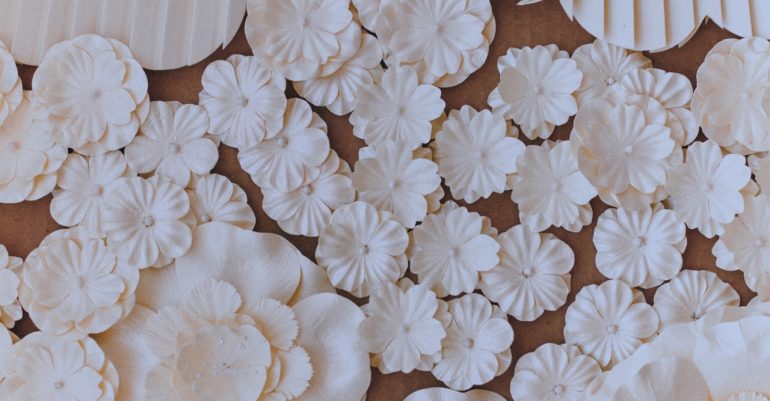

In early 2026 in Paris, an exhibition titled “Beyond our Horizons” is set to open. This is not merely a display of Japanese and French craftsmanship; it is a profound philosophical dialogue. It seeks to answer a core contemporary question: in a fluid world, how do we place those memories, emotions, and identities related to “home”?
By analyzing the exhibition’s framework and the thoughts of two core artists, we find that the answer may lie in those repeated gestures, transformed materials, and the open meaning of the works. Art and craft, here, transcend the category of decoration to become mobile homes carrying personal and collective memory, guiding us towards a new, more elastic and warm lifestyle.
I. From Physical Space to a “Container” of Memory
Traditionally, “home” is a physical space built of bricks and blood ties. However, contemporary thought is pushing the displacement of this concept. For the artists participating in the exhibition, “home” is first connected to a deep state and memory.
Simone Pheuplin believes that “home” is less a place than a “state” of concentration and intimacy. In this state, one learns to listen to the material as much as to oneself. Her creation is deeply rooted in familial and regional heritage, although this heritage never appears in a literal or narrative way.
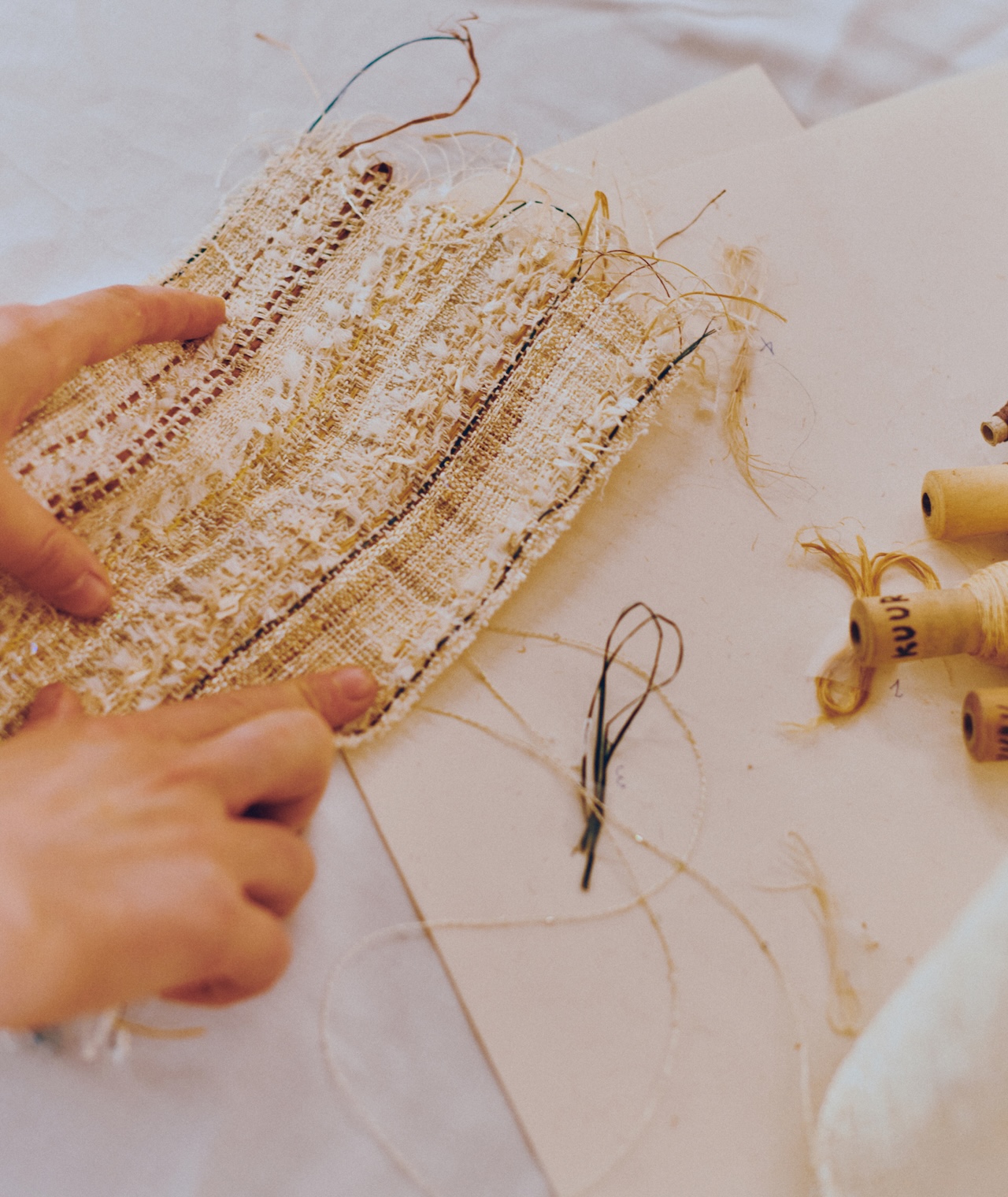
She comes from the rural Vosges region of France, where working with one’s hands was part of everyday life. The repeated actions of folding and pinning in her work are not the transmission of a specific skill, but the surfacing of a “sensory memory,” traces of what has been transmitted through touch, repetition, and patience. Therefore, for her, heritage lives on through this “continuity of gesture” and respect for what precedes us. Her artistic practice is a quiet way of keeping this memory alive.
This idea of space as a “container of memory” resonates with the Eastern philosophies explored in the exhibition. When encountering Japanese culture, Pheuplin was deeply moved by the way the home is conceived as a space of “balance and restraint”. That attention to space, to emptiness and silence, aligned with her own creative vision.
She found a “serene relationship to time and imperfection” in Japanese culture to be particularly precious: the marks of use and irregularities of materials are accepted as part of the life of objects. This acceptance mirrors her own practice of allowing the material to follow its own path. This reveals a common point: the warmth of a “home” lies not in the perfection of its furnishings, but in its capacity to accommodate the traces of life and the imprints of time.
So, how can a specific artwork play the role of such a “container”? Pheuplin explains that her work functions as a “quiet space” where time and material allow emotions and memories to settle. Each fold and tension in the cotton retains a sensitive trace of the focus and feeling during creation. She does not aim to depict a specific story, but to create a form that leaves space for interior life, both for herself and for the viewer.
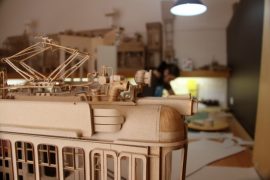
Julian Farade echoes this from another angle. He believes his work might serve as an emotional container because of his way of working: he does everything by hand, alone, without machines. In this process, the viewer can see “error, fault, and time”. These traces precisely carry the emotions of creation, such as frustration, joy, or relief. Thus, part of the value of a handcrafted object stems from the human time and emotional temperature condensed within its making process.
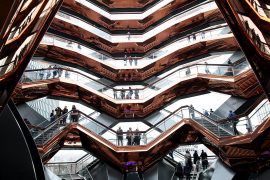
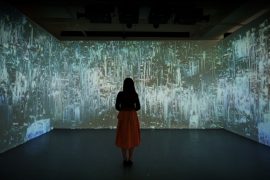
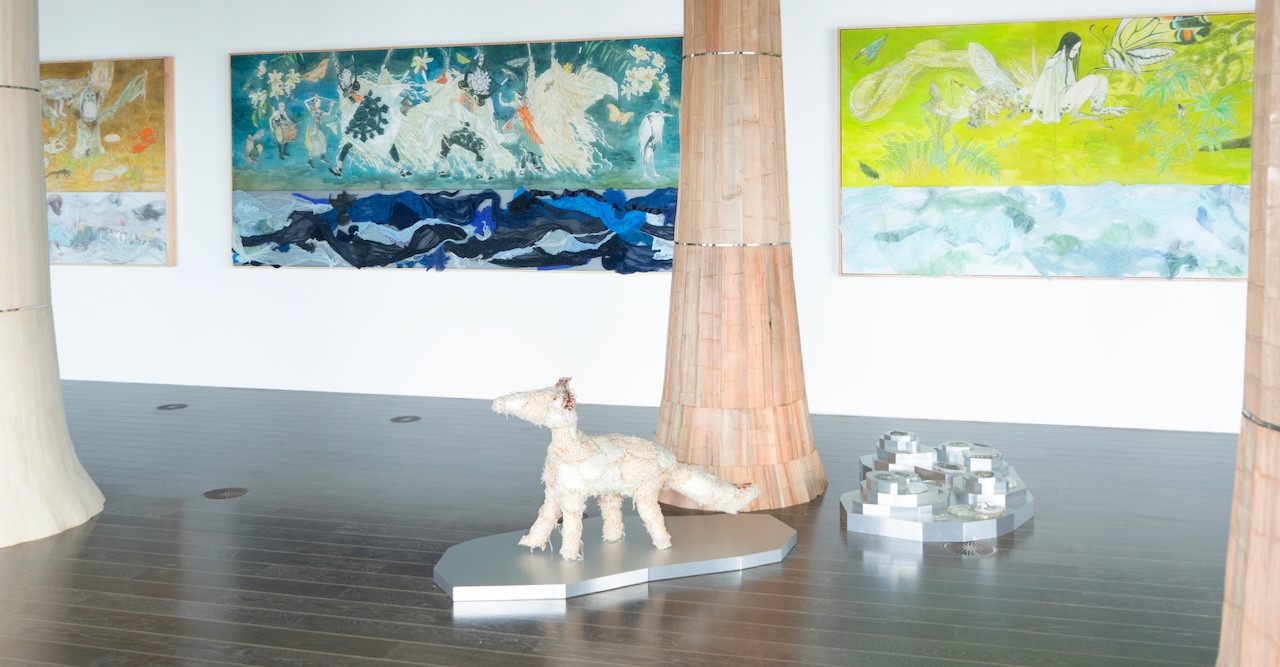
The exhibition “Beyond our Horizons” itself is the spatial presentation of this philosophy. It is designed as an “immersive journey,” showcasing the works of nearly thirty Japanese and French creators, including many new pieces created in collaboration with the Maisons of 19M.
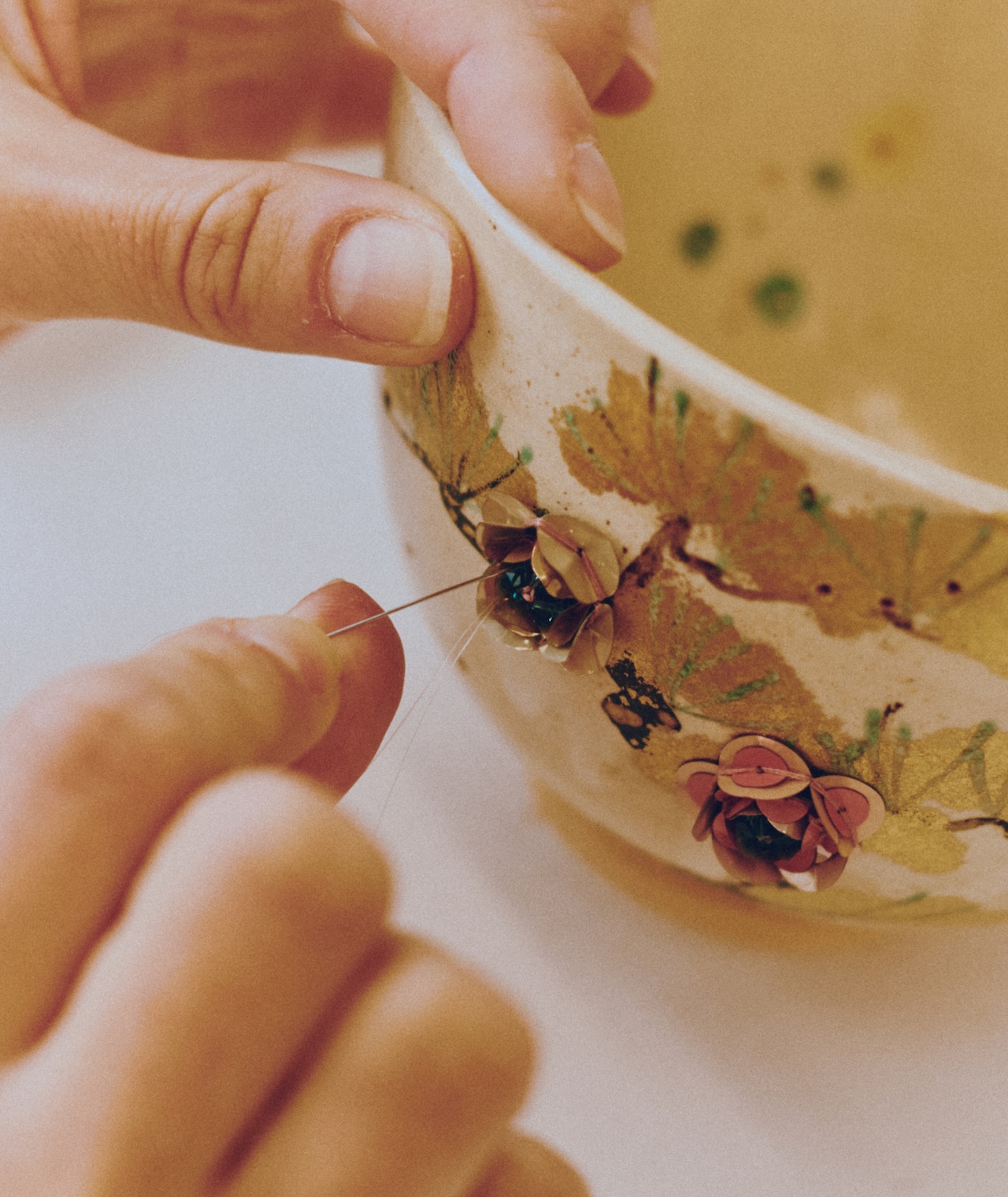
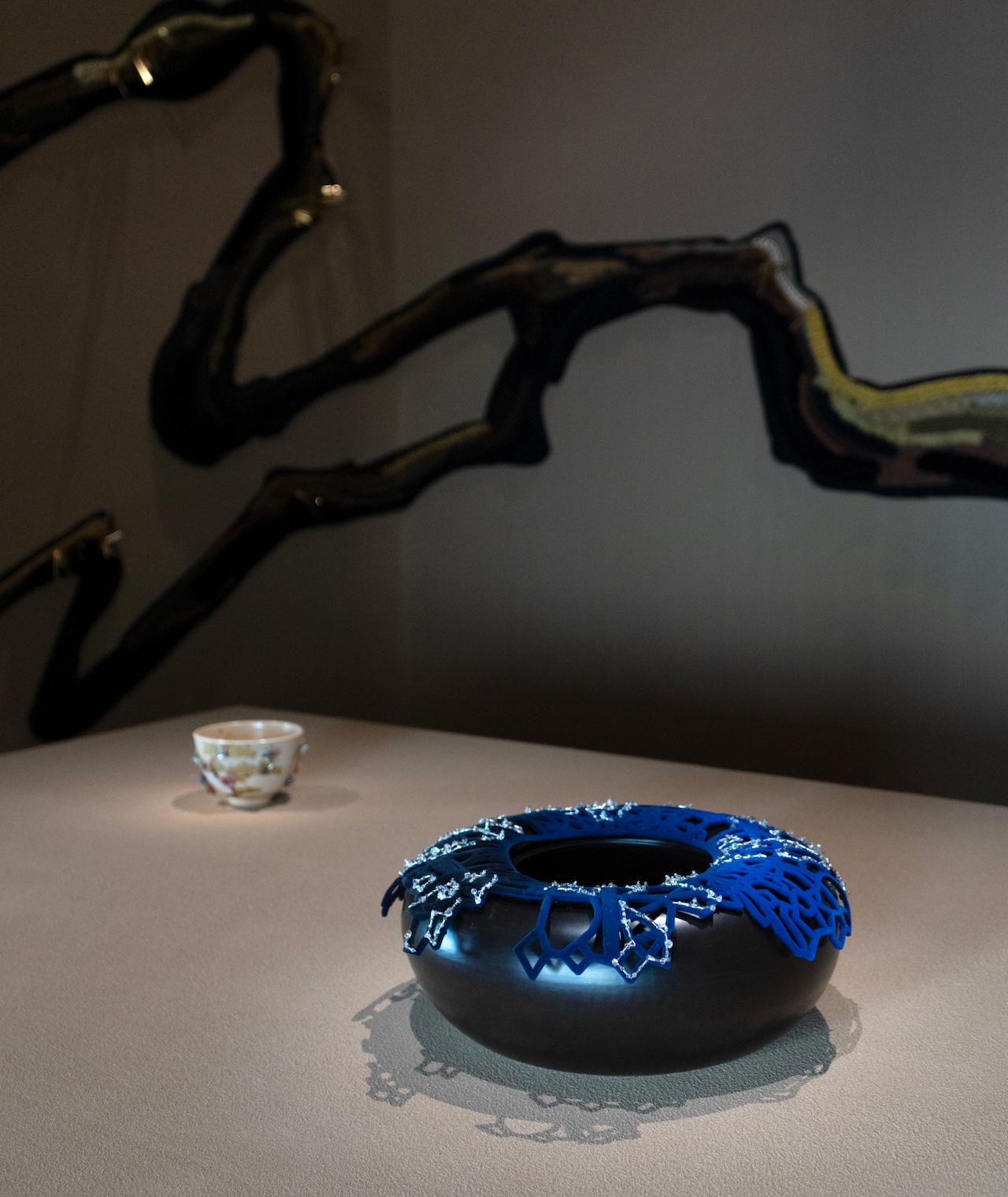
When visitors enter this space, they are not entering a cold gallery but stepping into an enlarged “home” composed of countless memory containers. The embroidered ceramic bowls, woven noren, beaded sculptures on display here are not isolated objects but condensations of time, gestures, and emotions from different cultures. They invite the viewer not to consume, but to contemplate and converse.

II. Traditional Genes and Contemporary Translation
Materials are the most direct carriers of memory. From the lightweight paper and bamboo of Japan to the heavy metals and silks of France, each material carries its own cultural history. In the exhibition, the soft light filtering through Japanese paper lanterns is juxtaposed with the intricate texture of French beaded sculptures, visually narrating different aesthetic languages. Faced with these materials full of “cultural genes,” how do contemporary artists both respect tradition and innovate?
Simone Pheuplin’s practice offers a clear path. She states plainly that the cultural identity of her work resides precisely in her choice of materials: she insists on using undecatised cotton from her native Vosges region and French pins. These materials carry her personal memory and regional heritage. However, she is not bound by tradition.
She sees tradition as “alive,” something that “can be transformed”. Her innovation manifests in new ways of folding and twisting the cotton. In creation, she lets the material guide her, respecting the possibilities it reveals itself. Therefore, tradition is a “cornerstone” for her, but what is built upon it is a completely new form imbued with a contemporary sense.
This “transformation” is particularly evident in collaborations with different workshops. Pheuplin’s collaboration with Maison Goossens was a breakthrough. Fascinated by the mastery of metalwork, she decided to step out of the familiar field of textiles and attempt a dialogue between tin and her cotton.
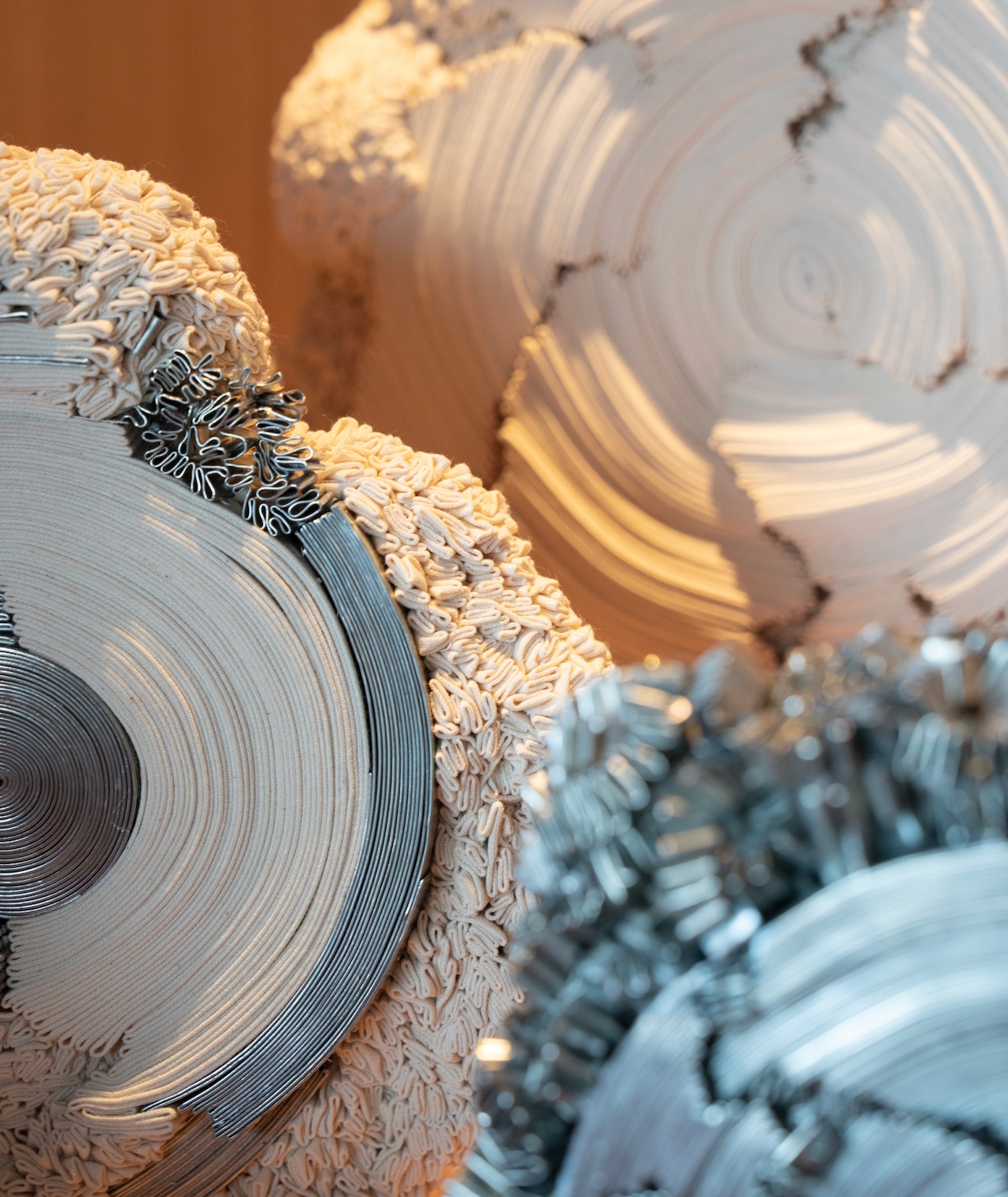
Together with the artisans, they carefully analyzed the movements she gives to the cotton in order to “translate” them into metal. This collaboration not only gave birth to new works but also opened up new creative directions for her, leading her to imagine more complex forms and future possibilities. Here, traditional skill is not a specimen in a museum but an active agent that can spark new life through collision.
Julian Farade’s approach to materials is more intuitive and personal. He admits that he chooses materials (like velvet or satin) primarily for the visual pleasure and tactile sensation they provide, not first considering their cultural connotations. His sculpture is about “twisting, knotting, and making connections”; he uses materials that his hands can handle. This seemingly “de-cultural gene” approach actually liberates the material from another angle.
In his collaboration with Lesage, facing extremely precious and fragile fabrics, he learned “restraint”. This adjustment of “gesture” due to the material’s characteristics is itself a profound dialogue, allowing the material’s own qualities (like fragility) to become part of the creation, thereby carrying the experience and memory of this unique collaboration.
The theme proposed by the exhibition’s curator—“how gestures and skills… enhance our view of the world”—is perfectly illustrated here. The collaboration between Pheuplin and metal artisans, and the interaction between Farade and the embroidery atelier, are collisions of different “gesture” systems. These collisions can spark new directions precisely because of an underlying commonality: deep “attention and respect for the material”.
Whether it’s disciplined repetition or intuitive improvisation, when creators face material with full concentration, cross-cultural dialogue finds a solid foundation. Tradition continues not because of rigid adherence to rules, but because it is sincerely understood, transformed, and reassembled in new contexts.
III. Emotional Warmth and the “Blank Space” of Meaning
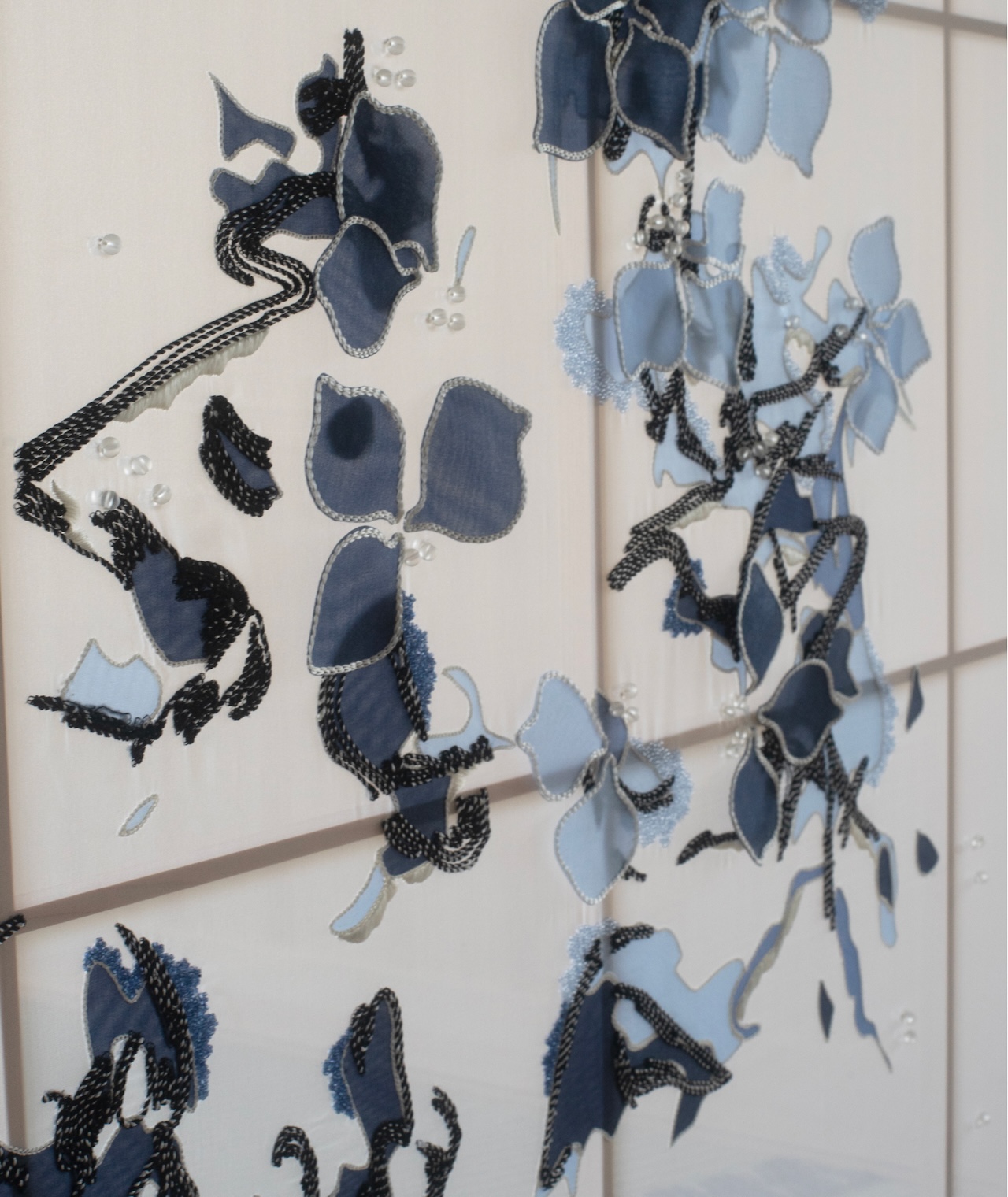
When “home” becomes a container of memory, and when “skill” emphasizes creative transformation, our criteria for judging “value” also change. A new concept of “luxury” is emerging, no longer equated with material accumulation and surface perfection, but residing in “emotional warmth”.
Simone Pheuplin defines this luxury as “immaterial.” She believes the true value of a handcrafted object lies in the time devoted to it by the artisan, the mastery of their craft, and the “unique touch” that makes each piece one of a kind. Luxury resides in the “transmitted gesture” and the act of making itself, in the work’s ability to “question, endure, and leave a lasting trace”.
Julian Farade, while not directly defining luxury, emphasizes that a work must remain in “dialogue” with the viewer to “stay alive”. This implies that the “vitality” of a work—its ability to evoke emotion and thought—is its precious aspect. This luxury is inward, experiential, concerning intimacy and resonance, not external display.
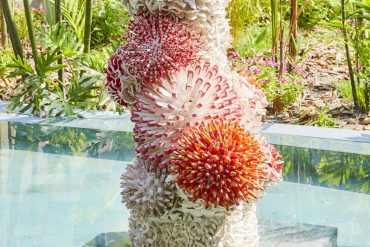
To evoke this resonance, artworks need “blank space.” Here, “blank space” refers not only to visual space but more to the openness of the meaning structure. Pheuplin’s sculptures are inspired by forms in nature, such as cracks in the ground, sea foam, tree trunks, but she abstracts them, creating monochrome works.
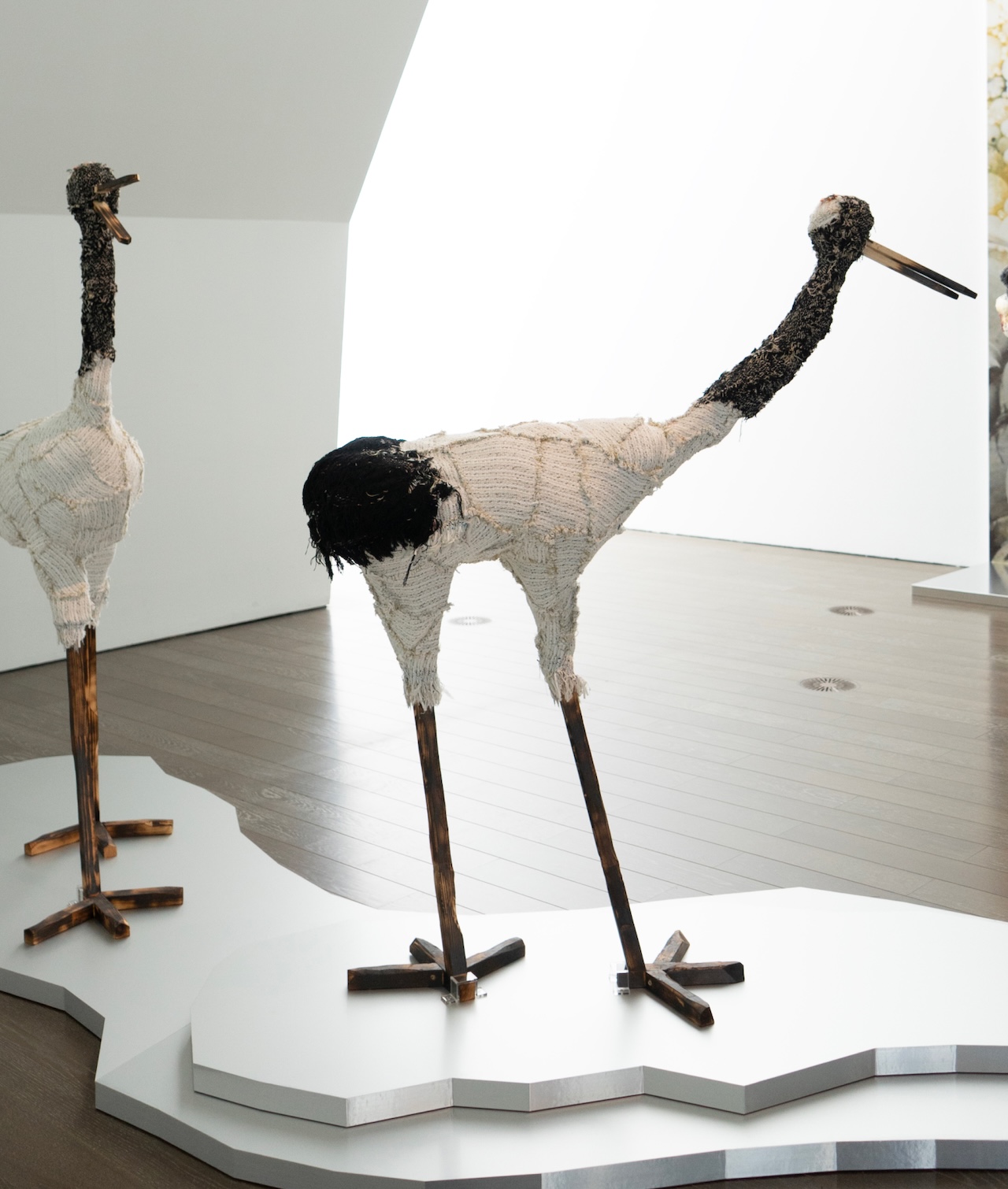
This approach naturally evokes a sense of “familiarity” for the viewer while leaving ample room for personal interpretation and emotional projection based on one’s own mood, memories, and cultural background. She is often surprised by what visitors perceive in her work that she had never imagined.
This makes her realize that once a work is created and offered to the world, it no longer belongs solely to the artist; the artist, in turn, becomes a “spectator” of the emotions it awakens. This sharing and co-creation of meaning is the source of a work’s vitality.
Farade similarly believes that viewers need to remain “active” in the space of the work, able to “touch, feel, even be inside it”. This emphasis on multi-sensory experience and physical participation is another form of “blank space”—it reserves space for the viewer’s body and action.
This aligns with the concept of “functional flexibility” in the philosophy of “home”: a home is warm because it can adapt to the growing and changing needs of family members; a work is moving because it can accommodate the varied understandings and experiences of different viewers.
Whether it’s Pheuplin’s abstract folds that invite meditation or Farade’s materials that invite interaction and touch, they all reject a single, fixed interpretation, thereby gaining the elasticity to continue “living” through time.
IV. Craft as a Universal Language
If the philosophy of “Home” stops at personal emotional attachment, its influence remains limited. The ambition of the “Beyond our Horizons” exhibition lies precisely in pushing the boundaries of this philosophy from the private sphere to the community, culture, and even broader human levels.
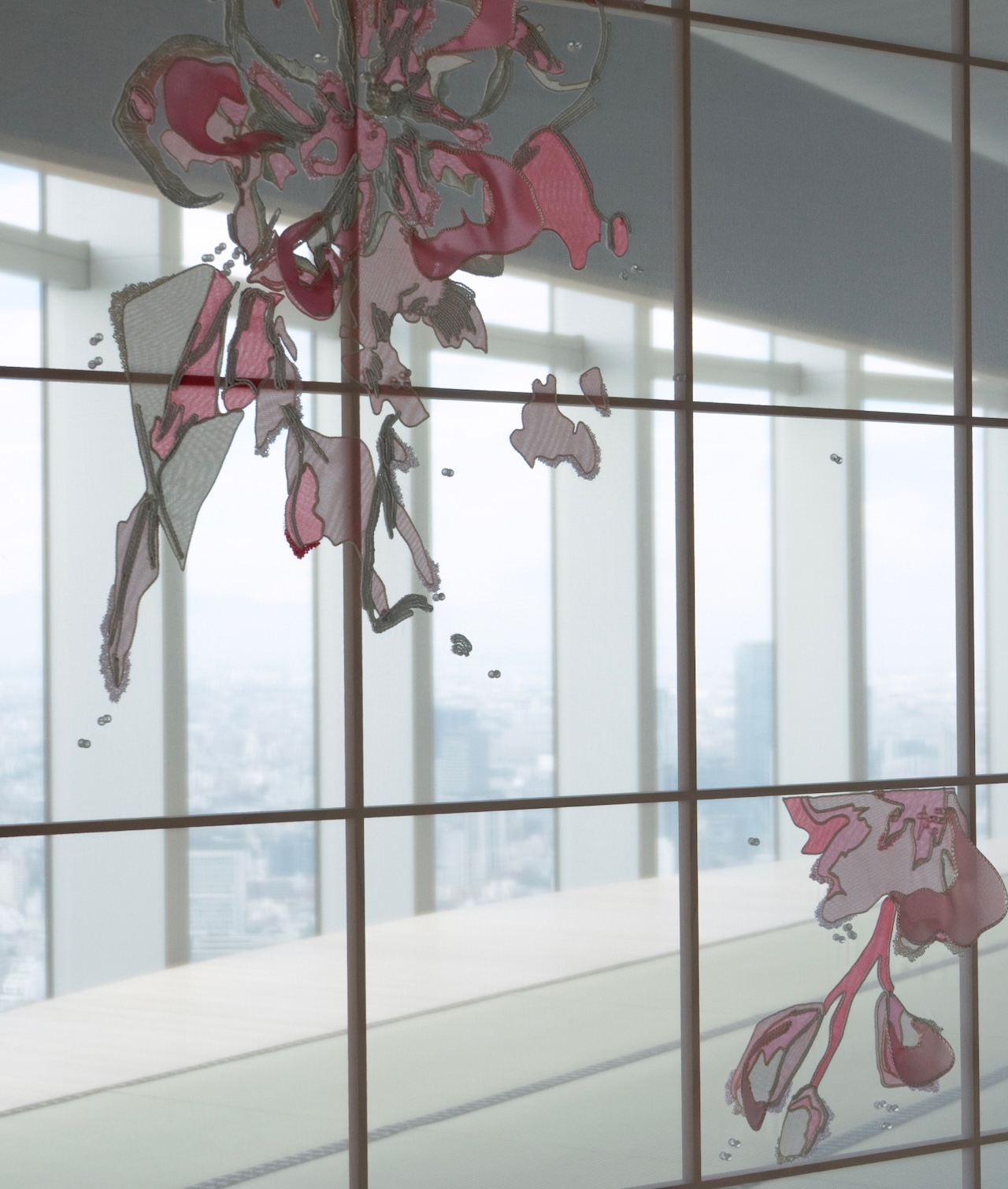
The President of 19M noted that the exhibition shows “how heritage and innovation can coexist and feed off each other”. When French lace is juxtaposed with Japanese kintsugi, when Vosges cotton is combined with Parisian metalwork, this “nourishment” creates cross-cultural ripples.
Art and craftsmanship appear here as a “universal language”. This language does not rely on specific words or ideologies; it communicates through materials, forms, and making gestures, able to bypass many barriers and reach the core of human perception and emotion.
Simone Pheuplin envisions that when artistic practice moves from the private studio to public space, it can become a carrier for promoting “understanding, respect, and empathy” within communities and even between nations. They remind people to view our “constantly evolving” world from a “collective” and “inclusive” perspective.
A public installation created with community participation, an exhibition gathering weaving techniques from around the world, both silently tell the same story: our differences are worth cherishing, our memories can be shared, and our future can be woven together through dialogue.
The transmission of skill, therefore, is no longer just about ensuring a technique is not lost, but about safeguarding a way of understanding the world and connecting with each other. It shapes the identity of communities and nations, ultimately integrating this identity into a richer, more diverse human heritage.
Conclusion: Towards a Life Rooted in Dialogue and Memory
Through an analysis of the “Beyond our Horizons” exhibition and the thoughts of the two artists, we clearly see that the concept of “home” has undergone a profound metamorphosis in contemporary art and craft practice. It has evolved from a physical dwelling to an internalized state of memory and emotion, materialized and shared through the artwork as a “micro-carrier”.
Traditional materials and skills are no longer a heavy burden but a “living foundation” that can be understood, dialogued with, and creatively transformed, gaining new life in collisions with heterogeneous cultures. Consequently, the value of luxury is re-anchored in “emotional presence” and the intimacy of condensed time, while the “blank space” in a work’s meaning provides room for continuous resonance.
Ultimately, all this points to a goal beyond the individual: art and craft as a universal language, building understanding across borders, connecting the “homes” of countless individuals into a more inclusive spiritual homeland.
“Beyond our Horizons” is not just an exhibition title; it is a proposal for a philosophy of home paradigm. It invites us, in an era full of flow and change, to construct our own spiritual anchors by deepening our craft, respecting materials, embracing imperfection, and cherishing the process.
The core of this lifestyle is not what we possess, but how we create, how we remember, and how we open ourselves to others. When horizons are transcended, what we discover is not emptiness, but the vast and vibrant prairie of dialogue between countless “homes of memory” that are equally deep, warm, and marked by time.
This is perhaps the most precious gift that art and craft can offer us today: a “home” that we can carry with us and continually enrich through exchange.
About “Beyond our Horizons”
From January 29 to April 26, 2026, Paris’s 19M gallery in Aubervilliers will host the “Beyond our Horizons” exhibition. Originating from its successful Tokyo premiere in 2025 at Mori Tower’s 52nd floor which attracted 75,000 visitors, this reimagined showcase now celebrates creative dialogues between French and Japanese artisans.
Initiated by Chanel’s artistic institution 19M, President Bruno Pavlovsky states:
This transcends craftsmanship display to become a laboratory where two cultures’ heritage and innovation collide.
Eleven French ateliers collaborate with 30 Franco-Japanese creators across installations, textiles, and ceramics to explore “how traditional techniques reshape contemporary vision.” Curated by a cross-disciplinary team, the exhibition unfolds as an immersive journey guided by “the poetry of gestures.”
ArtThat is also honored to be invited to engage in this cross-cultural dialogue, hoping to seek new interpretations through 喜可贺©️’s “Chinese Home Philosophy for a New Lifestyle” — as we mentioned in “The Three Pillars of the New Humanistic Paradigm”:
Space as a container of memory, functional flexibility, and a redefinition of “luxury” — which is not about material accumulation, but about emotional warmth and the sedimentation of time.
Please kindly note the coming ArtThat Interview: A New Interpretation of “Home Philosophy” in Cross-Cultural Dialogue — To the Artists of “Beyond our Horizons”.
The article combines AI generation for reference only. All images courtesy of 19M, shared with permission