
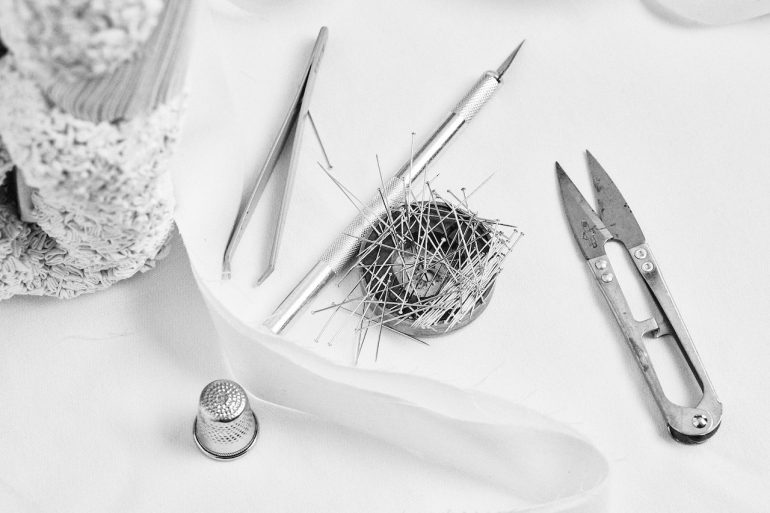
Art and craft, here, transcend the category of decoration to become mobile homes carrying personal and collective memory, guiding us towards a new, more elastic and warm lifestyle, which is told us in “Beyond the Horizon: When Art and Craft Become a Home for Memory I“.
ArtThat is also honored to be invited to engage in this cross-cultural dialogue, hoping to seek new interpretations through 喜可贺©️’s “Chinese Home Philosophy for a New Lifestyle” — as we mentioned in “The Three Pillars of the New Humanistic Paradigm”:
Space as a container of memory, functional flexibility, and a redefinition of “luxury” — which is not about material accumulation, but about emotional warmth and the sedimentation of time.
This outline aims to build a bridge for communication, connecting the humanistic connotations of Eastern “Home Philosophy” with the contemporary dialogue of Japanese and French craftsmanship. It will guide the artists to start from their own creative practices, reflect on the universal value of “home” as a carrier of cultural memory and emotion, and explore the ways of integrating tradition, skill, and life aesthetics in different cultural contexts.
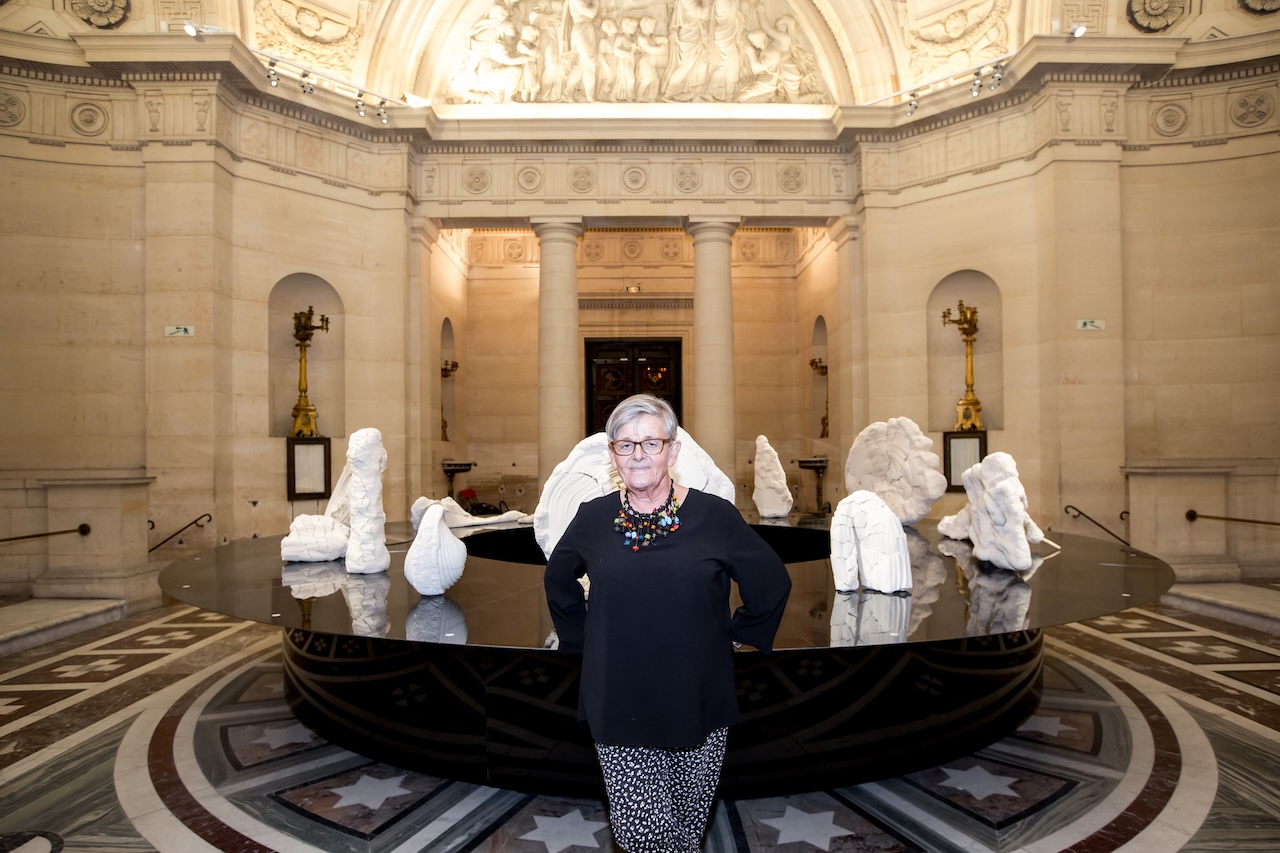
The following dialogue is from Alan Huang, Editor-in-Chief of ArtThat, and the participating artists Simone Pheuplin and Julian Farade.
Part I: Creative Roots and Cultural Identity
Alan Huang: In your creative practice, does the concept of “home” or “heritage” play a role? How do you understand the expression of personal memory and family craftsmanship within your artistic language?
Simone Pheuplin: Yes, very deeply. The notions of home and heritage are inseparable from my work, even though they never appear in a literal or narrative way. I was born in the Vosges, in a rural environment where working with one’s hands was part of everyday life. Craftsmanship was not considered a separate field, but rather an obvious, natural way of inhabiting the world. These gestures, often observed in silence, have profoundly shaped my relationship to material and to time.
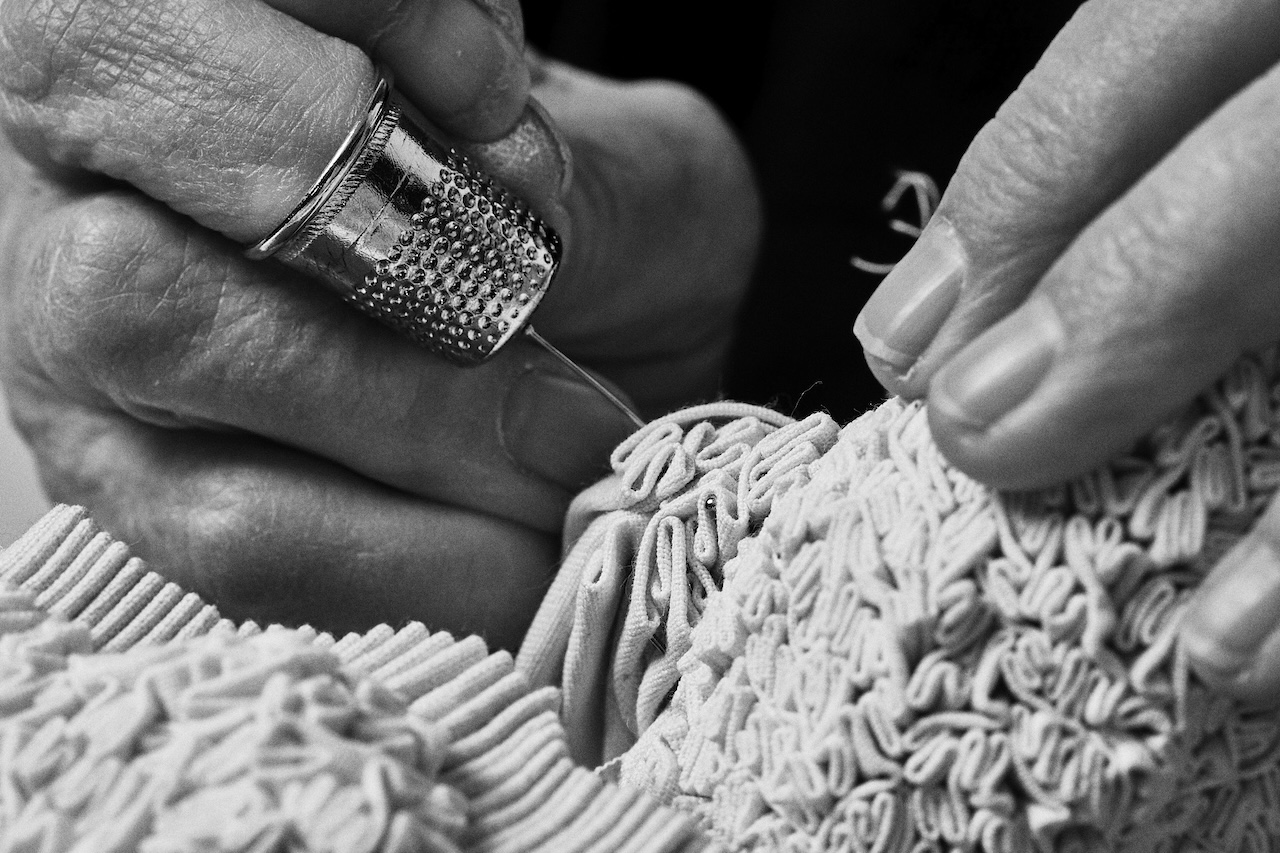
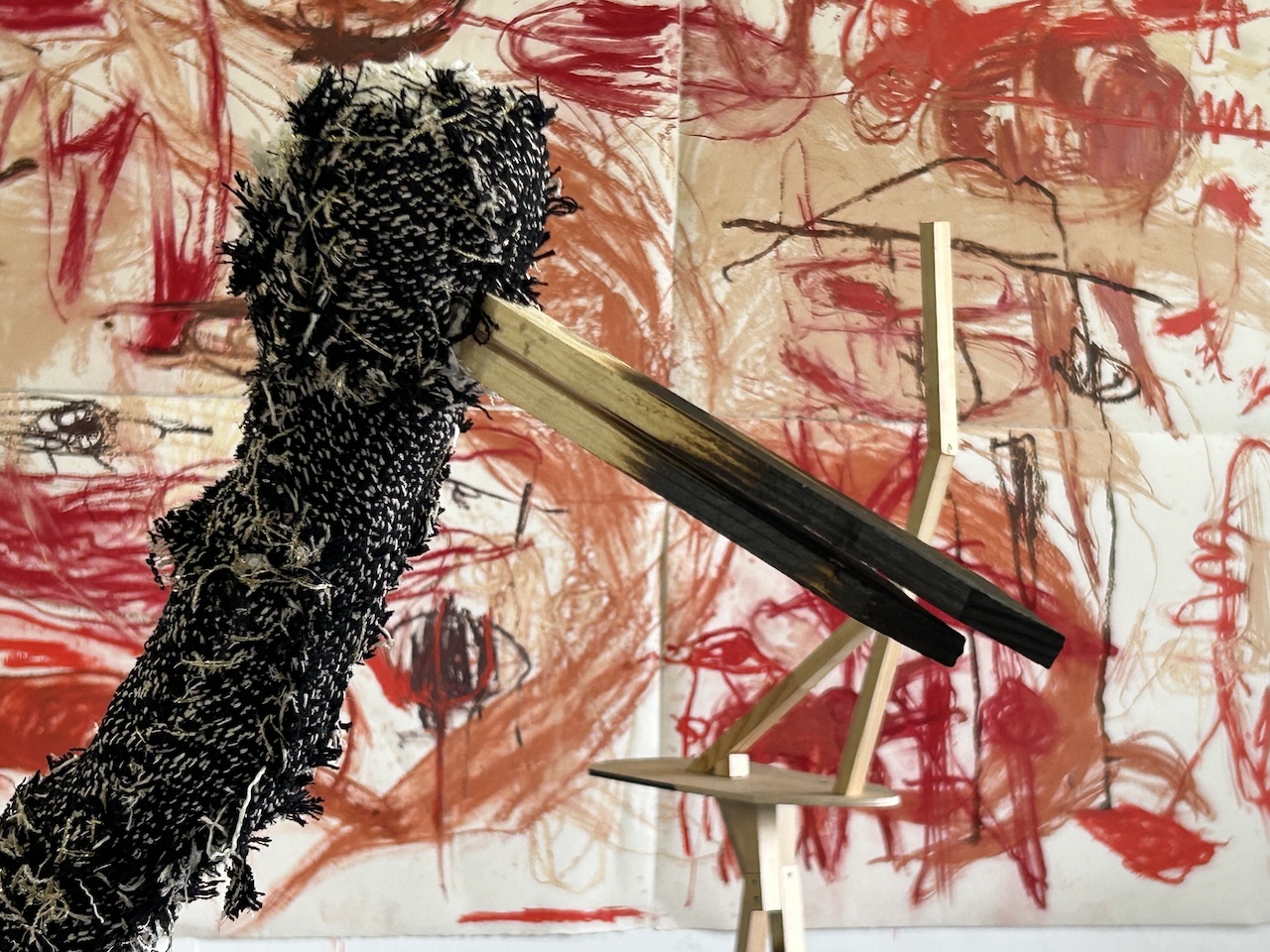
My work is nourished by a form of memory that is primarily sensory. It is not about telling a personal story, but about allowing what has been transmitted through touch, repetition, and patience to surface. The cotton I use, and the repeated gestures of folding and pinning, carry traces of this familial and domestic heritage, where time had a different value and where the hand possessed its own intelligence.
For me, home is less a place than a state: a space of intimacy and concentration, where one learns to listen to the material as much as to oneself. Heritage lives on through this continuity of gesture, through respect for what precedes us. I see my practice as a quiet way of keeping this memory alive, not by fixing it in place, but by allowing it to evolve, transform, and find its own expression in the present.
Julian Farade: Indeed, the concepts of “heritage” and “home” do play a role, but more in a subconscious way. I try to work with an automatic language, where each sign conveys a meaning. Home, for example, could represent “mother”, or a sense of security.
Personal memory, for me, is an internal way of learning. By this I mean that all children imitate and copy in order to act. My mother did a lot of craft work when I was a child, in a way, my eyes became accustomed to handwork. That’s how today I can do it without thinking about it much. It has become like breathing, I often forget that I am breathing. Personal memory and family craftsmanship, it is the same.
Alan Huang: The core of the “Beyond our Horizons” exhibition is the dialogue between the Japanese and French creative scenes. In this cross-cultural collaboration, have you discovered values or aesthetic pursuits in the other’s culture that resemble the spirit of “Home Philosophy”?
Simone Pheuplin: What particularly moved me in Japanese culture is the way the home is conceived as a space of balance and restraint, where each element finds its place without excess. It is not about filling space, but about allowing it to breathe. This attention to space, to
emptiness and silence, deeply resonates with my own way of working and with my vision of the home as a place of calm and inner focus.
I was also struck by the serene relationship to time and imperfection. The marks of use and the irregularities of materials are not hidden, but accepted as part of the life of objects and spaces. This peaceful acceptance of imperfection closely mirrors my own practice, where I allow the material to follow its own path, without trying to correct or dominate what it reveals.
Finally, the discreet yet essential presence of nature felt very important to me. The continuity between interior and exterior, between living space and landscape, creates a sense of harmony and calm. In a similar way, my work is always guided by natural rhythms, by slowness, and by attentive observation of transformation.
Julian Farade: Absolutely, I was already aware of the concept of “kintsugi”, Japanese method repairing ceramics, and “yakisugi”: by burning the surface of the wood, you preserve it from fire, and time. Where I grew up, many objects had sentimental value. These two concepts of care for objects, time and memory, were an opportunity for creation, for sure.
Part II: Craft, Material, and Emotional Vessels
Alan Huang: How does your work in the exhibition (for example, the embroidered ceramic bowl in collaboration with Atelier Montex, or the embroidered shoji with Lesage Intérieurs) serve as a “container” for emotions and memories?
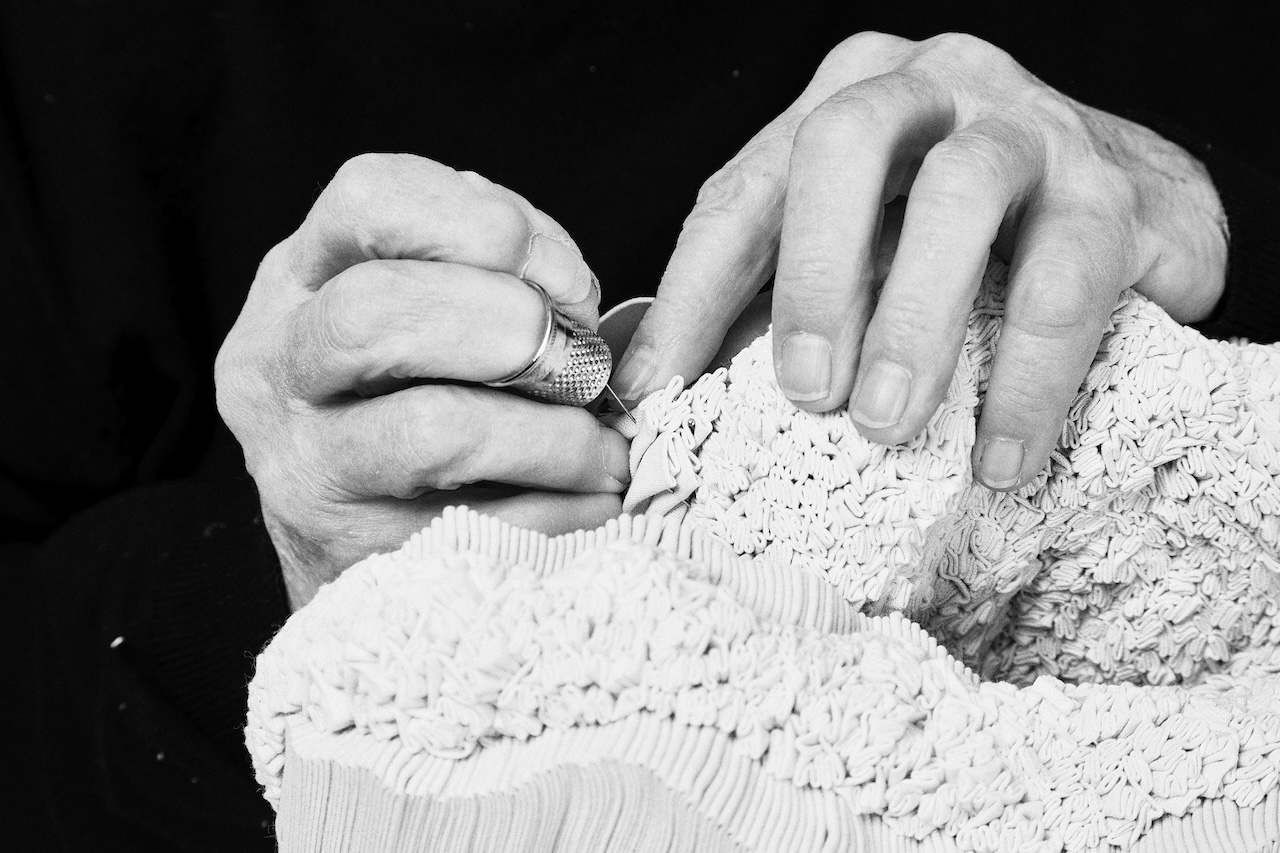
Simone Pheuplin: My work functions as a quiet space where time and material allow emotions and memories to settle. The strips of cotton that I fold and pin are not just materials, they become vessels for repeated gestures, moments of focus, patience, and reflection. Each fold and tension retains a sensitive trace of what has been lived and felt. I do not aim to depict a specific emotion or memory, but rather to create a form that leaves space for the interior life, both for myself and for the viewer.
My collaboration with Maison Goossens allowed me to design a piece where cotton from my native Vosges region interacts with tin for the first time. This encounter between materials enriches the work with silent memory and repeated gestures, while giving the viewer the possibility to project their own emotions and memories. The material thus becomes a silent language, a space that welcomes without judgment, where imperfection and fragility bear witness to the passage of time.
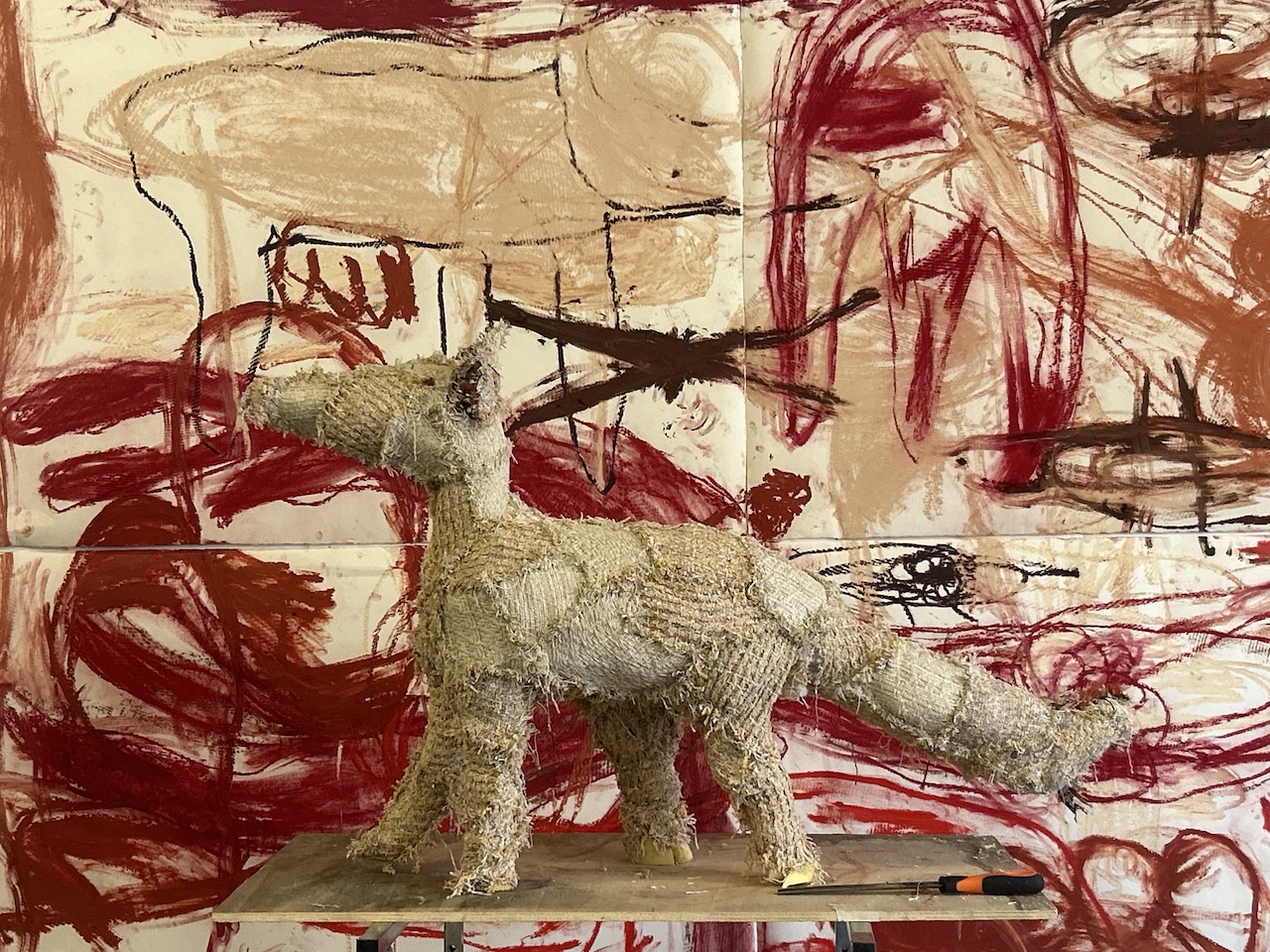
Julian Farade: I hope it does. For the “how” it’s a hard question to answer. I think it has to do with the way I work. I work alone, everything is done by hand, no machines. Through this, I think you can see mistakes, errors, and time. For me, these concepts carry emotions—such as frustration, joy, or relief—and memories (July 2025) .
Alan Huang: The Chinese concept of “Home Philosophy for a New Lifestyle” emphasizes that “space should be a container of memory.” In your view, can a handicraft or an art installation play a similar role within a larger spatial narrative, becoming a micro-carrier of family or cultural memory?
Simone Pheuplin: Yes, absolutely, even within a larger space. The value of an object lies not so much in its aesthetics, since beauty is subjective, but in the time and attention it has received, in the history it carries. An antique table, a textile, a vase, or a sculpture can evoke traditions, past customs, and ways of life, thus inscribing a fragment of family or cultural memory into the space.
By welcoming these objects into a space, we create points of resonance where the past dialogues with the present. They become micro-carriers of history, inviting contemplation, remembrance, and transmission. The space, by containing them, is transformed into a living territory of memory, capable of connecting generations and awakening a sensitivity to what came before us.
Julian Farade: Absolutely! I also think that people need to be active in that space. I mean that they should be able to touch, feel, or even sit within it. It has to be a dialogue in order to be alive.
Alan Huang: From Japanese paper lanterns to French beaded sculptures, materials themselves often contain cultural genes. When selecting and using materials, how do you balance their traditional connotations with expressions of contemporary innovation?
Simone Pheuplin: It is very clearly in the choice of material : the cotton from my native Vosges, that much of the cultural and even personal identity of my work resides. This cotton carries my memories, my territory, and my heritage. But the “cultural gene” is not limited to the material itself: it is also expressed through the act of pinning. By sculpting the textile, I repeat an ancestral gesture that has been passed down to me, a gesture that embodies an intangible craft, one of patience and attentive care.
At the same time, innovation arises in the way I fold, twist, and pin the cotton. I do not seek to erase the memory of the material, but to extend it, to make it resonate through time and space. In this creative process, I let the material guide me : I do not work against it; the cotton traces the form, dictates the rhythm, and reveals its possibilities.
This is how I integrate my contemporary vision into this heritage and precious craft. Each strip of cotton thus becomes a dialogue between what it has been and what it can become today, a space where tradition and contemporary creation coexist in a delicate yet living balance.
Julian Farade: I try to work with them, to give meaning on the side, if I can put it that way. For me, sculpture is about twisting, creating knots, and making links. I use what I can work with my hands. I don’t think much about cultural “genes”. I choose a material for the pleasure it gives me, what it does to the eye, for example velvet or satin.
Part III: Dialogue, Integration, and Rebirth
Alan Huang: One of the exhibition’s curators mentioned that the theme is about “how gestures and skills… enhance our view of the world.” During your collaboration with the artisans of 19M, which collisions of “gestures” or “skills” surprised you the most and sparked new creative directions?
Simone Pheuplin: Thanks to this exhibition, I had the opportunity to visit several of the maisons at 19M, each embodying a distinct craft. My encounter with Maison Goossens was decisive: I was immediately fascinated and surprised by their mastery of metalwork. This discovery prompted me to move beyond textiles and explore a new material, one that was unexpected within my practice.
Meeting Nathalie Abscheidt, workshop manager at Goossens, was equally significant.
She was already familiar with my work, and a natural dialogue emerged instantly between us. This four-handed project truly grew out of a shared encounter and a moment of mutual resonance.
Together, we carefully analysed the movements I give to cotton in order to translate and adapt them into metal. This meeting of gestures and skills opened up new creative directions, allowing me to imagine more complex folds, explore new techniques, and consider future collaborations.
Julian Farade: With this collaboration with Lesage, I discovered the fragility of the material. The fabric I was given to work with was very precious, I could put my hands on it, but with restraint.
Alan Huang: An important pillar of the “Home Philosophy for a New Lifestyle” is “functional flexibility,” which gives space the elasticity to adapt to family changes. Does your artwork also pursue a certain kind of “blank space,” reserving room for the viewer’s personal interpretation and emotional projection?
Simone Pheuplin: My sculptures are inspired by the forms I observe in my surroundings: cracks in the ground or on building façades, sea foam, tree trunks in the Vosges forests, and many others. I draw inspiration from them without ever copying them, creating monochrome works on the threshold of abstraction.
This naturally evokes a sense of familiarity for the viewer while leaving ample space for personal interpretation and emotional projection. I am often surprised by visitors’ responses—by what they perceive in my work that I had never imagined. Once a work is created and offered to the world, it no longer belongs solely to the artist; we, in turn, become spectators of the emotions it awakens.
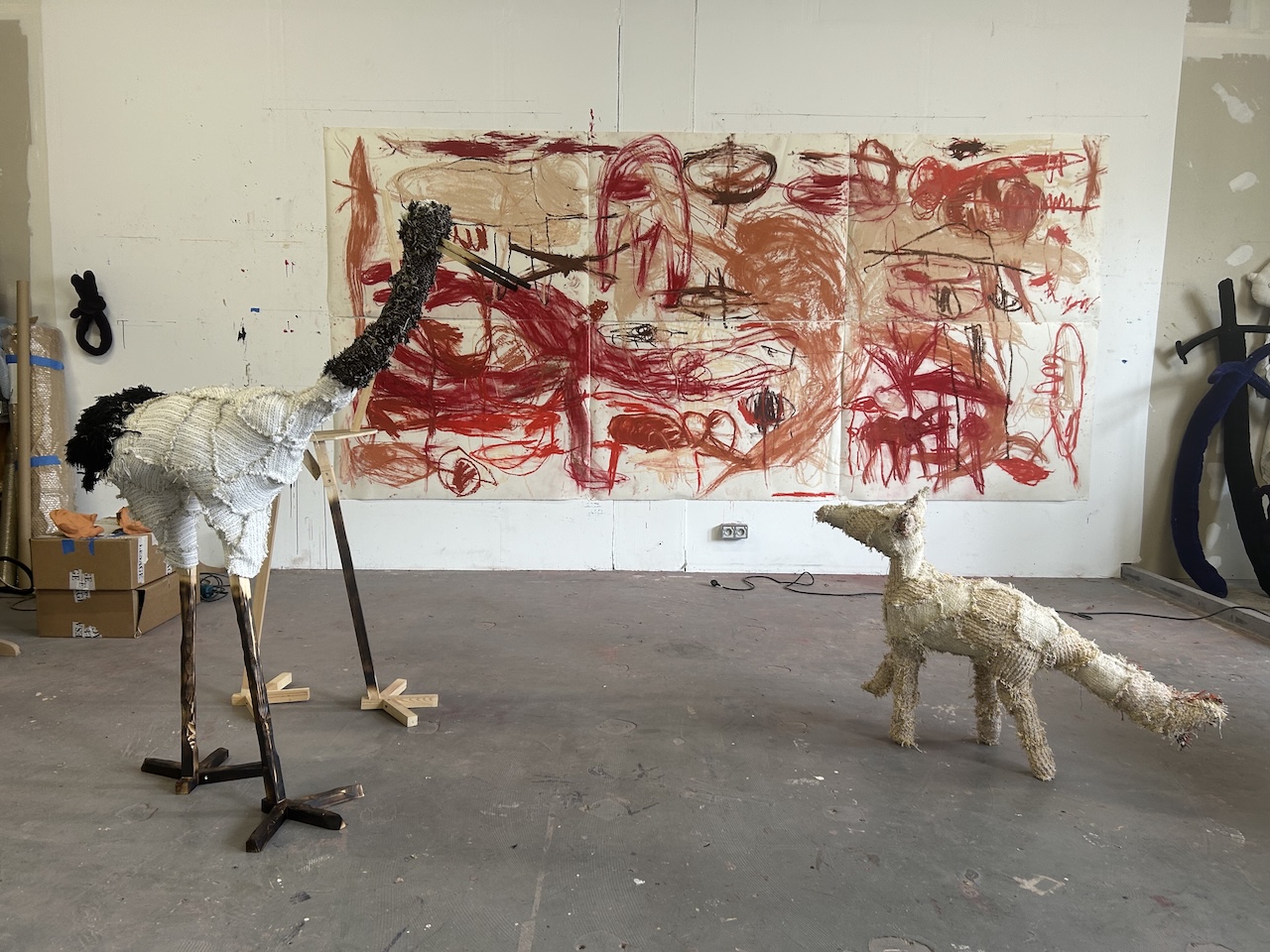
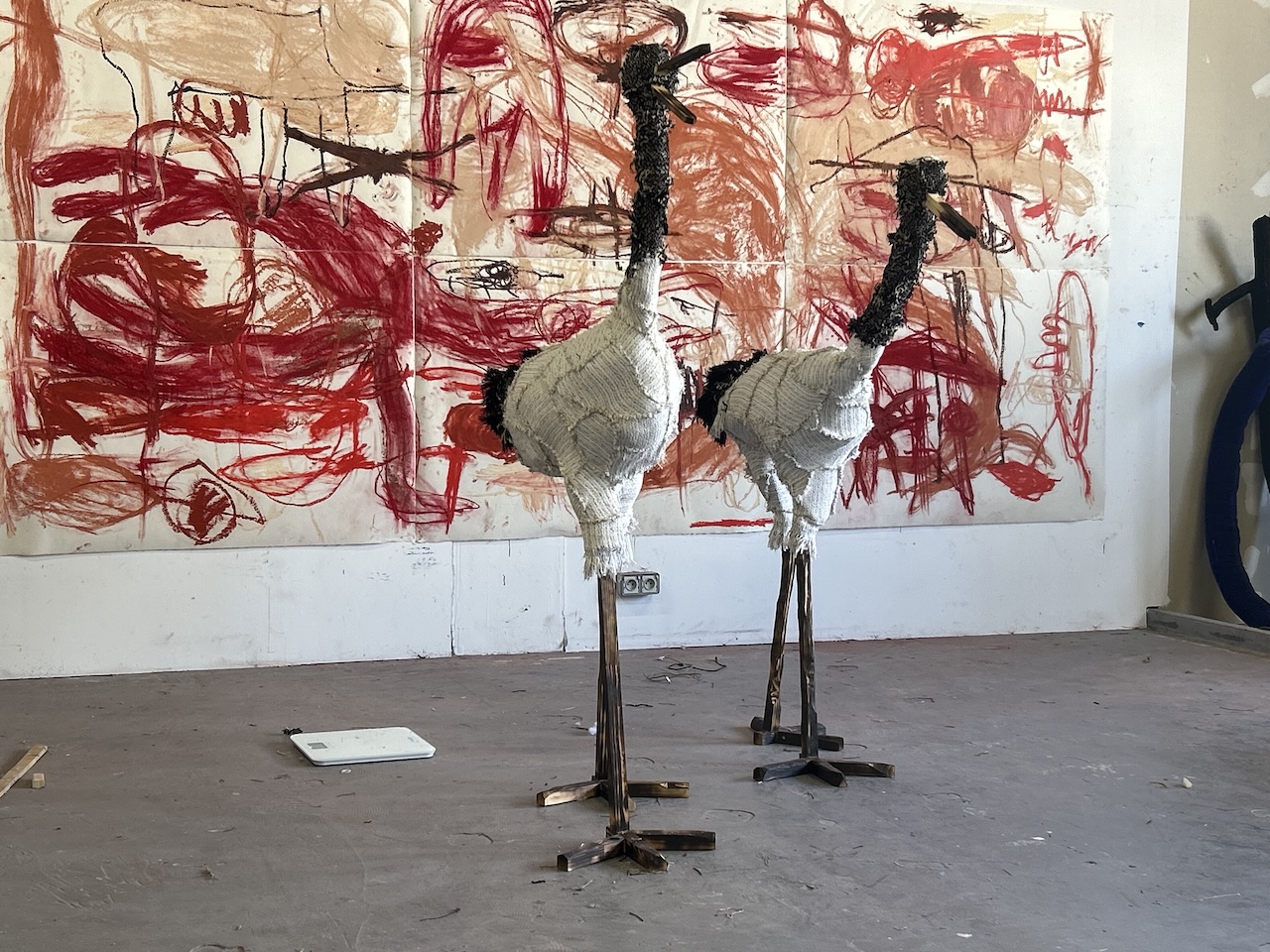
Julian Farade: Yes, I hope so! That’s why I work with a universal semantic of signs (birds, crocodiles, house, ladders, chairs, houses), so that if you take the time to look at them, you can project yourself and create a world of your own. Obviously, I work with myself, but there is still a desire to communicate, to make people feel. For that, I think there needs to be a sense of transparency. I use signs as portals. Viewers can do the same, if they wish.
Alan Huang: The President of 19M noted that the exhibition shows “how heritage and innovation can coexist and feed off each other.” In your collaborative works, how do you handle the element of “tradition”—as a cornerstone, or as material that can be deconstructed and reassembled?
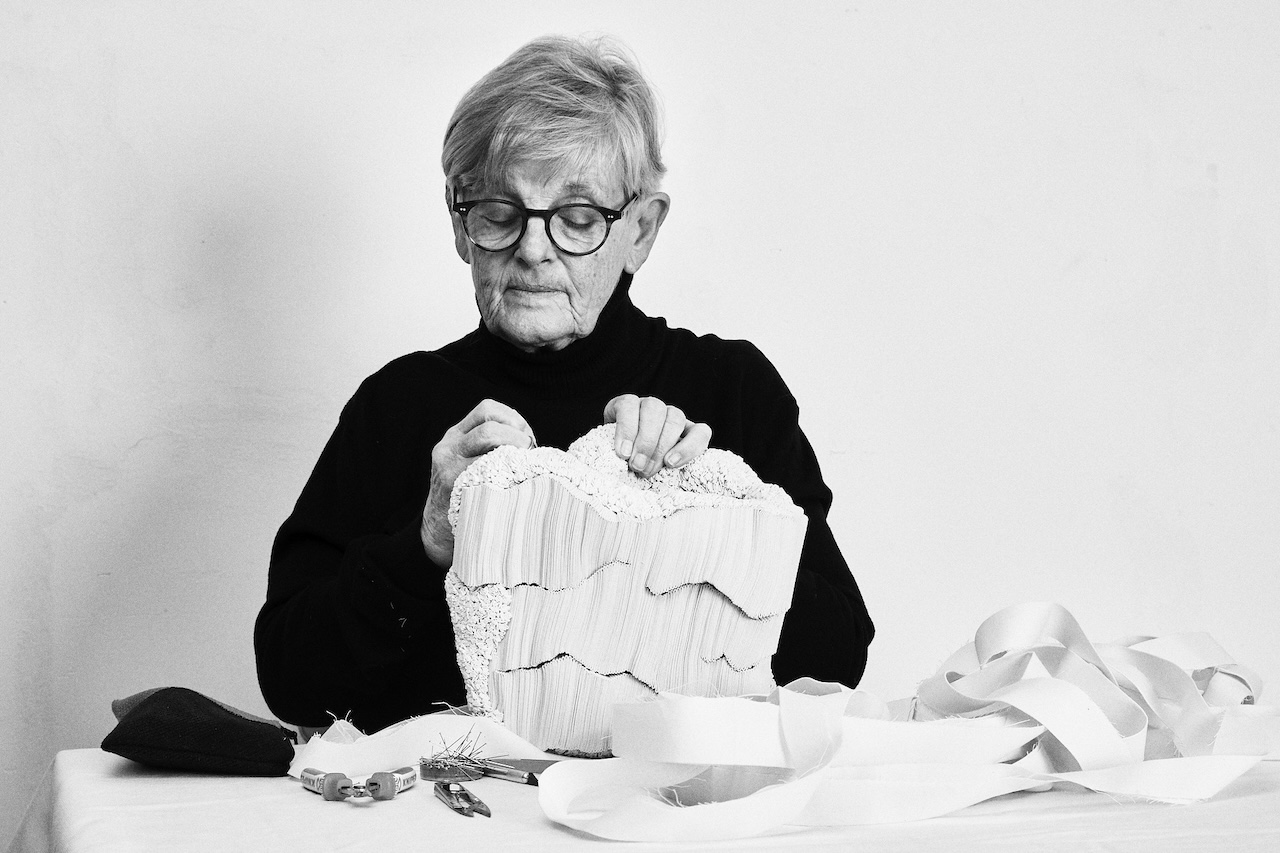
Simone Pheuplin: Textile art is an ancient practice, and I deliberately work with deeply traditional materials: undecatised cotton from the Vosges and French pins. Tradition is therefore at the very heart of my work. Yet my approach is to start from this tradition in order to create something entirely new.
Preserving and enhancing it through constant exploration of new techniques, creating new folds, and collaborating with other artists and artisans. It is a creative process that I have been pursuing for over fifty years.
Julian Farade: I handle tradition as a starting point. I play around it, with respect for it. I don’t see it as a cornerstone.
Part IV: Universal Values and Future Outlook
Alan Huang: “Home Philosophy for a New Lifestyle” redefines “luxury” as residing in emotional warmth rather than material coldness. In your opinion, where does the “luxury” of a craft object that integrates exquisite skill with deep emotion lie?
Simone Pheuplin: The true luxury of a handcrafted object lies in the time devoted to it by the artisan, in the mastery of their craft, the precision of their gestures, and the unique touch that makes each piece one of a kind. This luxury is immaterial: it resides in the transmitted gesture, in the act of making, and in the work’s ability to question, endure, and leave a lasting trace.
Julian Farade: Hard question, Luxury is an open concept for me. I think you have to define the “why”, if this “why” finds its own answer, then the value exists by essence.
Alan Huang: The exhibition aims to go “beyond borders and horizons.” If we expand the boundaries of “Home Philosophy” from the household to the community and even the nation, what role do you think art and craft can play in promoting this broader cultural understanding and transmission?
Simone Pheuplin: Art and craftsmanship form a universal language. In every culture, textile art holds an essential place: materials, techniques, and uses may differ, yet together they constitute a remarkably rich global heritage. That is precisely the theme of this exhibition at the Galerie du 19M.
Know-how and gestures are passed on, and cultures continually influence one another. This transmission preserves tradition while allowing it to evolve. Art and craftsmanship are living legacies that shape the identity of a community or a nation and extend far beyond borders.
Julian Farade: It can bring people together, uniting them around a common project—a warmer, more connected world.
About “Beyond our Horizons”
From January 29 to April 26, 2026, Paris’s 19M gallery in Aubervilliers will host the “Beyond our Horizons” exhibition. Originating from its successful Tokyo premiere in 2025 at Mori Tower’s 52nd floor which attracted 75,000 visitors, this reimagined showcase now celebrates creative dialogues between French and Japanese artisans.
Initiated by Chanel’s artistic institution 19M, President Bruno Pavlovsky states:
This transcends craftsmanship display to become a laboratory where two cultures’ heritage and innovation collide.
Eleven French ateliers collaborate with 30 Franco-Japanese creators across installations, textiles, and ceramics to explore “how traditional techniques reshape contemporary vision.” Curated by a cross-disciplinary team, the exhibition unfolds as an immersive journey guided by “the poetry of gestures.”
Please kindly note the coming Beyond the Horizon: When Art and Craft Become a Home for Memory II.
About 喜可贺(Xikehe) ©️
As the pioneer of healing homeware, 喜可贺(”Xikehe”, Congrats Happiness)© initiated “Chinese Home Philosophy for a New Lifestyle,” which is rooted in the fertile soil of Chinese culture, retraces the origins of home philosophy, and fosters a new humanistic paradigm.
The brand is managed by Mr. Huang Rongnan and has been honored with the UNESCO “City of Design” Logo Global Open Call Outstanding Work Award (only three awards were given, with the grand prize vacant).
Making its debut, the “Eternal Blessings” Family Gift Collection was honored to be featured in the “Taste of the New Year” exhibition at the 2018 Shanghai Spring Festival Art & Culture Carnival, organized by the Shanghai Federation of Literary and Art Circles.
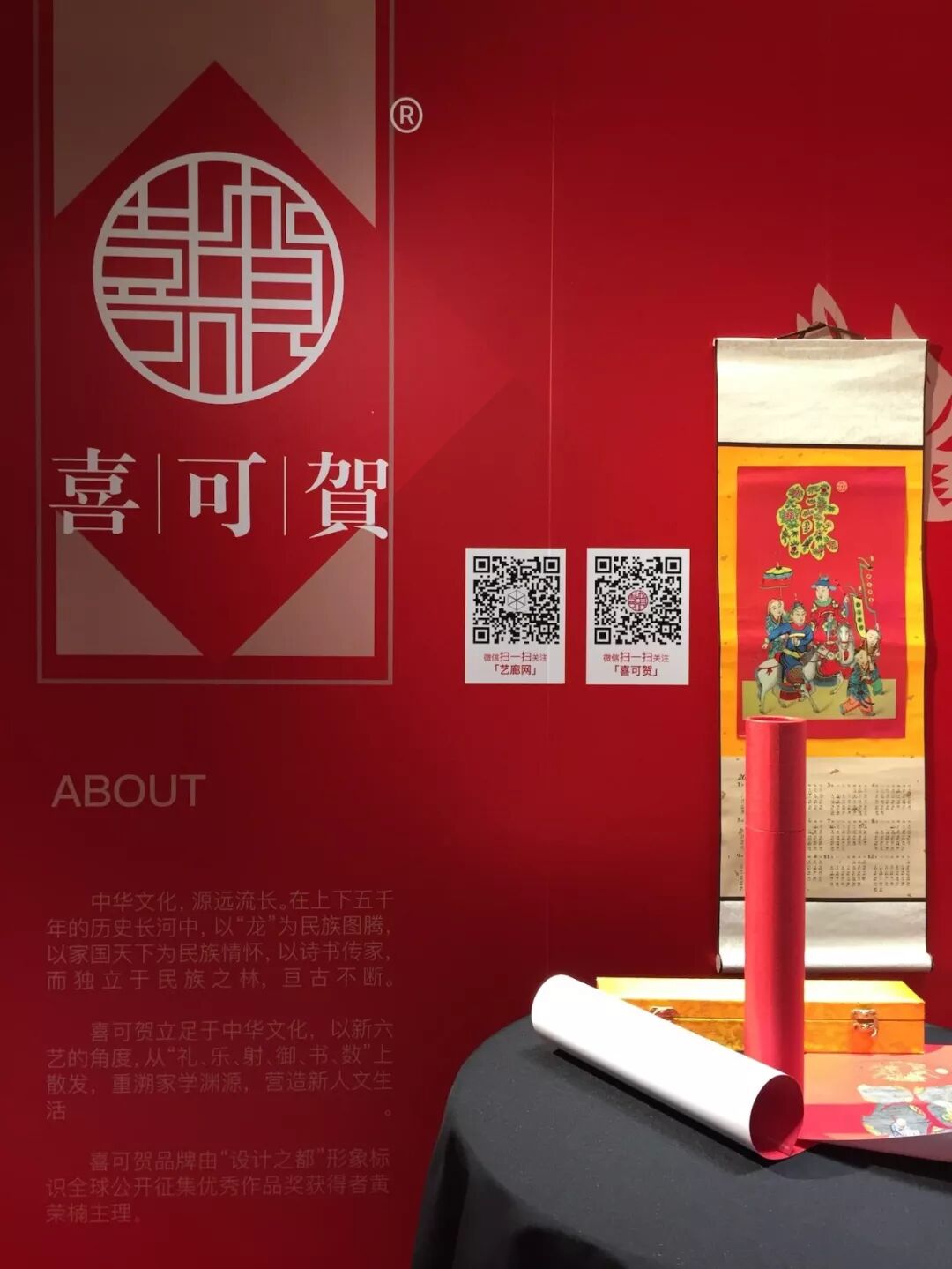
Using two-hundred-year-old folk woodblock New Year prints of “Fu Lu Shou Xi” (Blessings, Prosperity, Longevity, and Joy), it captures the age-old wishes and heartfelt customs that define the holiday for countless families.