
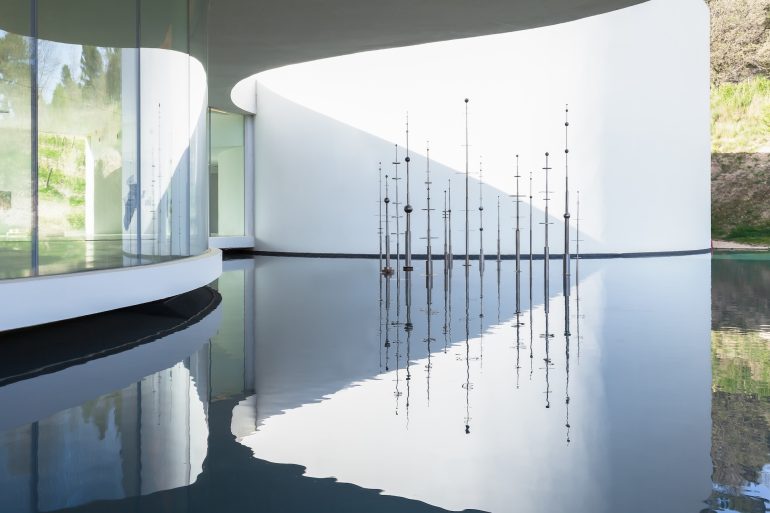

We live in an age of acceleration, of material abundance and torrents of information, yet the deep-seated anxieties about “where we come from” and “who we are” have not dissipated; instead, they have become more pronounced amidst the waves of globalization.
Consequently, the two ancient concepts of “home” and “heritage” have been subjected to new scrutiny. They are no longer merely about belonging to a physical space or the continuation of bloodline; they have evolved into a kind of spiritual vessel, a philosophy of seeking constancy within flux.
A recent exhibition focusing on Japanese-French creative dialogue, “Beyond our Horizons,” and the “Home Philosophy for a New Lifestyle” concept it reflects, provides an excellent observation window.
Through the narratives of two participating artists—Pauline and Clara—we see that the story of heritage is not about a solidified past, but rather a ceaseless contemporary practice concerning gesture, material, and memory.

I. The Core of Heritage
When asked about the role of “home” or “heritage” in their creative practice, the artists’ responses reveal a modern transformation of transmission. For Pauline, who grew up in a family of artists, family heritage is not a clearly itemized “list of techniques.”
She was surrounded by gestures, workshops, and materials from a young age in the diverse studios of her family. However, she explicitly states that what she inherited from her ancestors is “not a specific technique, but a relationship to material and craftsmanship, as well as an idea of sharing through gesture”.
This is a fundamental realization: the core of heritage shifts from “object” to “relationship” and “process.” What she inherited is a way of “thinking through the hands,” and the notion of the shared studio space as “a kind of universal home”. This means that true home philosophy is a transferable methodology for engaging with the world, particularly the material world.
Clara’s experience corroborates this from another angle. There is no direct lineage of craftsmanship in her family, although her grandmother was a painter. For her, heritage is “more about sensitivity, memory, and the way we learn to look at the world early on”.
Her “home” is deeply rooted in her studio, the place where she feels most grounded, creates, doubts, and experiments—a space of concentration, vulnerability, but also joy. Here, “home” is completely internalized as a creative psychological space and emotional anchor.
Both artists’ viewpoints jointly indicate that in the contemporary context, the essence of “heritage” often lies in the intangible: a sensitivity of perception, an ethic of work, a state of mind for coexisting with materials. These intangible elements possess more vitality and adaptability than any tangible pattern or recipe, precisely because they can traverse the boundaries of specific cultures and take root anew in different contexts.
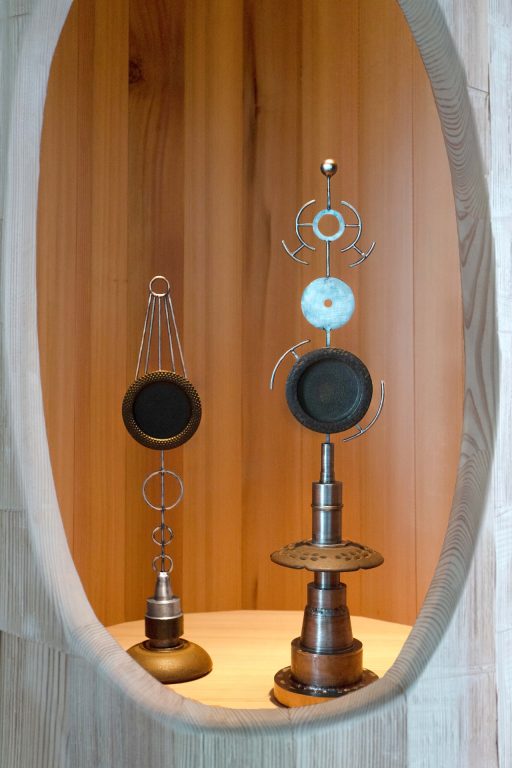
Varnished steel, casted steel, patina
38x10x10cm | 66x18x18cm
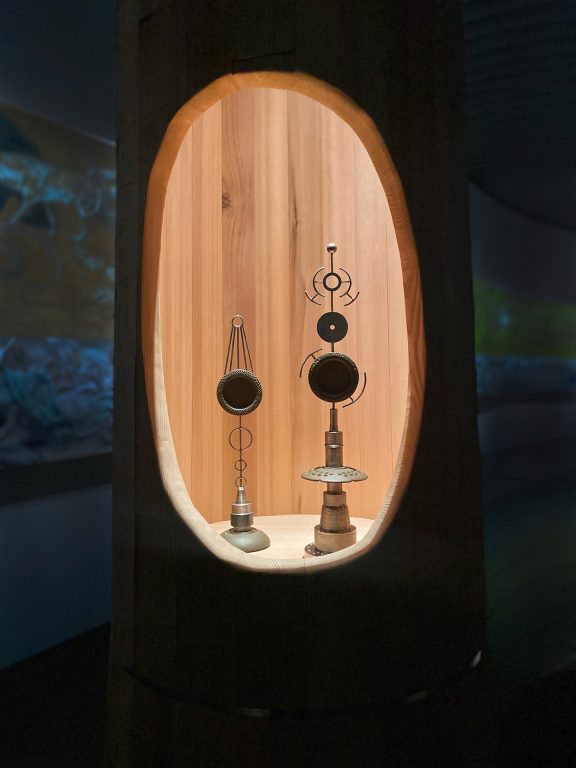
II. Cross-Cultural Dialogue
The “Beyond our Horizons” exhibition aims to build bridges between the Japanese and French creative scenes. This cross-cultural collaboration is not a simple grafting of forms, but a mutual recognition and resonance of deep-seated values.
Pauline observed in the collaboration that the two cultures share some fundamental values: “respect for gesture and craftsmanship, patience in learning, a deep regard for artisanal practices, and an acceptance of imperfection as an integral part of life”. These values are precisely the embodiment of the “home philosophy” spirit transcending the household to become a kind of cultural gene.
She poetically likens the exhibition’s trajectory to “the structure of an artist’s house,” with lanterns that illuminate thought, studio spaces where ideas circulate, and inner gardens that open new horizons onto the city. In this metaphor, the exhibition space itself becomes an expanded “home” that is “inhabited collectively,” where knowledge is transmitted and relationships are woven.
Clara specifically mentions the Japanese aesthetic concept of wabi-sabi, which finds beauty in imperfection, the traces of time, and what is fragile or incomplete. This concept resonates deeply with her own artistic pursuit, drawing her increasingly to seemingly secondary details and subtle imperfections, as these elements “give soul to an object and make it feel inhabited rather than finished”.
This discovery reinforced her belief that “home” is not about perfection, but about “presence and attention”. This pursuit of “acceptance of imperfection” and a sense of “presence” constitutes a profound common spiritual language in cross-cultural dialogue. It illustrates that despite the varied manifestations of techniques, the deep affection and humility towards the world that drives humans to create meticulously by hand is universal.
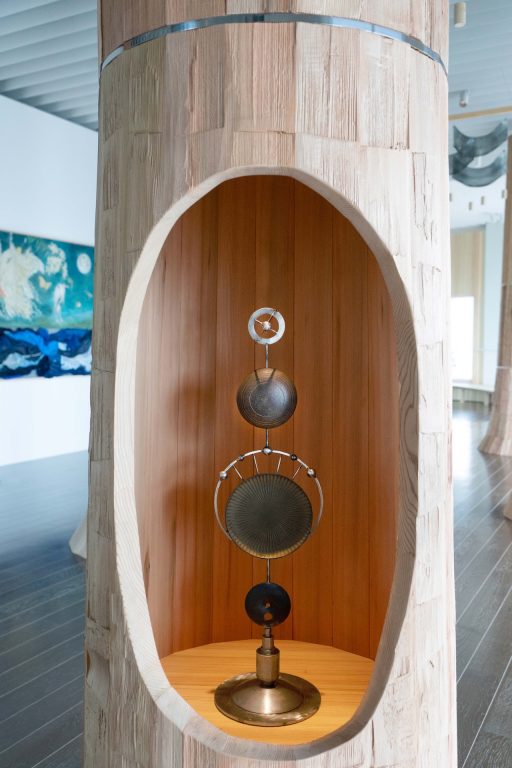
Varnished steel, casted steel, patina
51x11x11 cm
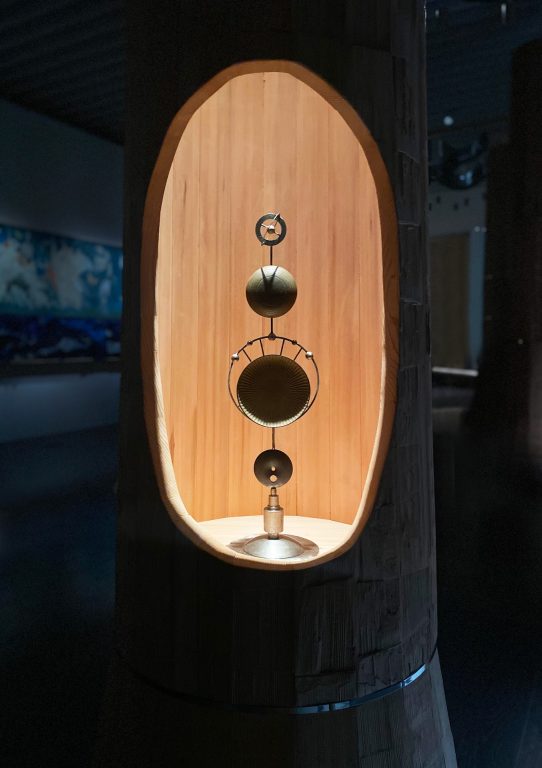
III. Art as Vessel
The Chinese concept of “Home Philosophy for a New Lifestyle” emphasizes that “space should be a container of memory.” This viewpoint finds a vivid echo in the creations of both artists. They unanimously regard their own works as carriers of emotion and microcosms of memory.
Pauline offers an exquisite explanation using her “Tako Tsubo” series as an example. Originally a Japanese terracotta octopus trap, the form was later adopted by the medical field to describe “broken-heart syndrome” caused by intense emotional shock.
Attracted by this transformation from a utilitarian object to a medical metaphor, Pauline created sculptures that function somewhere between organ, funerary vessel, and animal form, aiming to be “sensitive urns” capable of holding “pain, love, and memory”.
Here, an ancient form carries scientific discovery and universal emotional experience, allowing “individual memory meets collective memory” . She deeply believes that such an object can become a “micro-carrier of memory” within a larger spatial narrative, acting as a point of emotional concentration that invites viewers to project their own stories.
Clara similarly believes that art can serve as a “container for memory, emotion, and history”. She talks about how her feelings during the making process—whether joyful or melancholic—are absorbed by the material. When an artwork enters a space, it begins to influence its perception, can reveal certain qualities, shift the atmosphere, or invite observation.
Thus, an installation becomes a “micro-carrier of memory,” one that is not fixed or literal but open, allowing each viewer to project their own experience onto it . Both artists emphasize the “openness” and “unfinished” quality of their works, reserving space for the viewer’s interpretation.
Clara explicitly states she does not want to impose a single narrative, hoping instead that the works can be read differently depending on the viewer’s emotional state, memories, or cultural background. This “blank space” is precisely the vitality that allows a work to continue growing and adapting to different contexts.
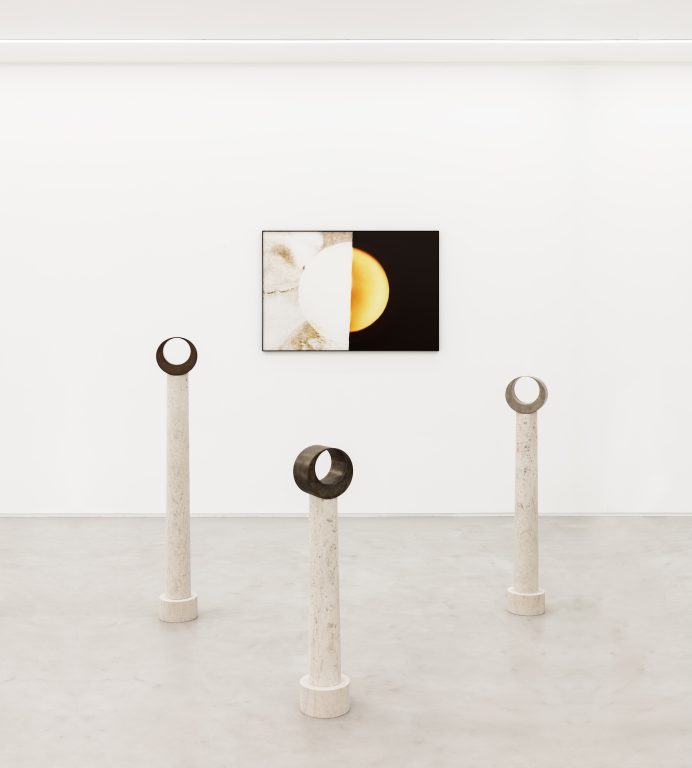
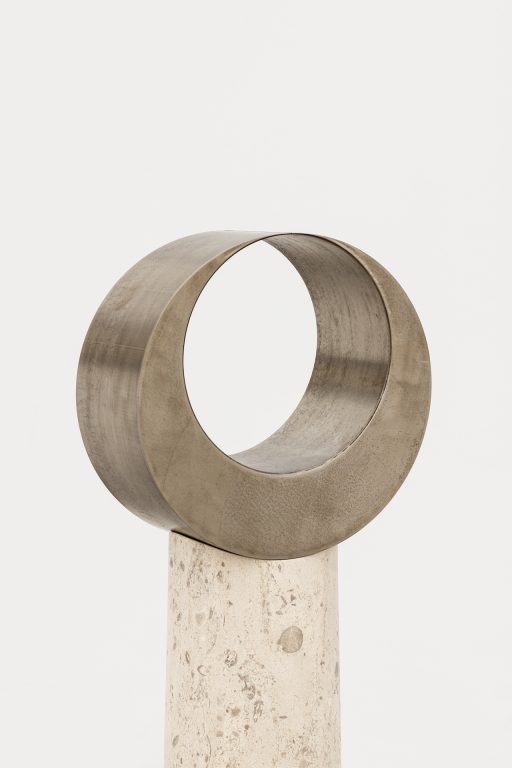
Limestone,
treated steel
Variable Dimensions
IV. The Language of Materials
Materials are the flesh of artistic thought, often carrying deep cultural genes within themselves. How do artists balance respect for a material’s traditional connotations with contemporary innovative expression? Their practices provide answers.
Pauline’s material choices are closely linked to her travels. She collects stones, fragments from different territories, each carrying its own history and geography . For the “Tako Tsubo” works, she used archival beads made of precious and semi-precious stones from Maison Desrues.
The symbolic virtues of these stones—to bring calm, balance, or protection—resonate directly with the theme of repair. She likens beading to a “reparative skin,” evoking the principles of kintsugi: not hiding the fracture, but making it visible and precious. Here, the traditional cultural significance of the material is cleverly integrated into a contemporary narrative about universal emotional trauma and healing.
Clara is often drawn to materials that come directly from the ground, like metal and stone, because they “carry a deep history within them”. She feels these materials have an inherent symbolic weight, yet she does not feel bound by tradition in a literal sense.
Her collaboration with Japanese artist Suzuki Mori-hisa illustrates this: both used steel, but in radically different ways. This contrast allowed her to explore how a material can carry memory while still being reshaped into new forms and meanings . For her, “tradition is something alive, something that can be transformed”. This attitude liberates tradition from being a template for replication into a “living material” for dialogue and recreation.
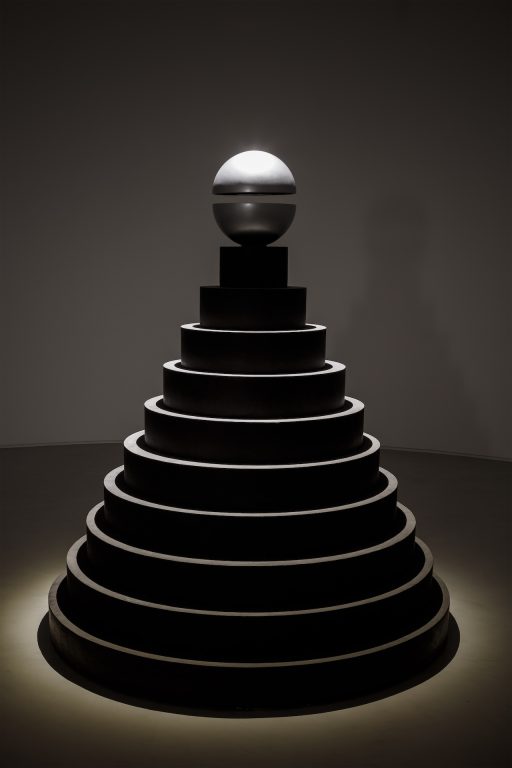
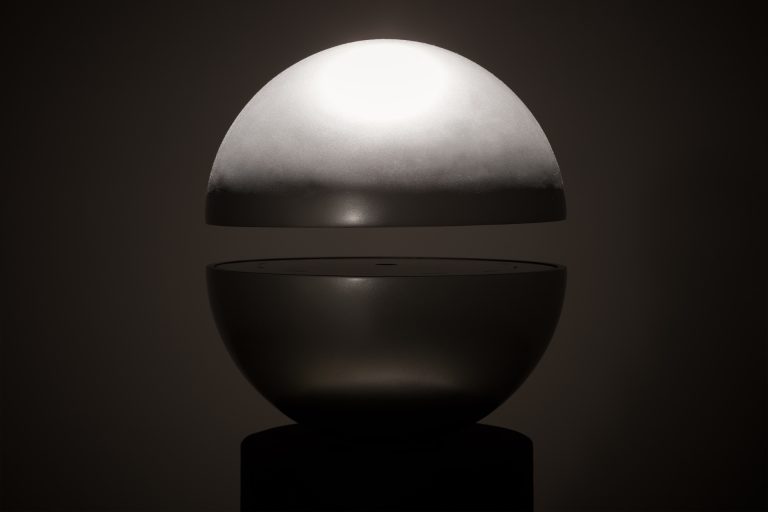
Polystyrene, resin, polyurethan paint, magnet,
195x150x150 cm
V. The Collision of Gestures
Collaboration with master artisans was a significant part of this exhibition. Such collaboration is not merely a layering of techniques but a convergence of different “gesture” philosophies, and innovation often bursts forth at this intersection.
Pauline’s collaboration with the artisans of Maison Desrues was marked by “exceptionally rich encounters of gesture”. What surprised her most were “the moments when highly codified techniques met more open artistic intentions,” revealing unpredictability and opening genuine spaces for dialogue. These collisions between gestures, rhythms, and know-how often shifted her thinking about a work, opened new directions, and made her deeply appreciate that “creation is often born from listening and exchange”.
Clara had a similar experience collaborating with Suzuki. She was surprised to find that despite different techniques—Suzuki’s gestures being precise, slow, and rooted in repetition and transmission, while hers were more instinctive, involving cutting and assembling—their gestures naturally echoed each other. This was because both approaches required “deep attention and respect for the material”.
This encounter, “between discipline and intuition,” opened new creative directions for her. She came to understand that “innovation often comes not from abandoning skill, but from allowing different forms of knowledge to coexist”. This once again proves that true progress is not rupture, but dialogue and expansion upon a solid foundation.
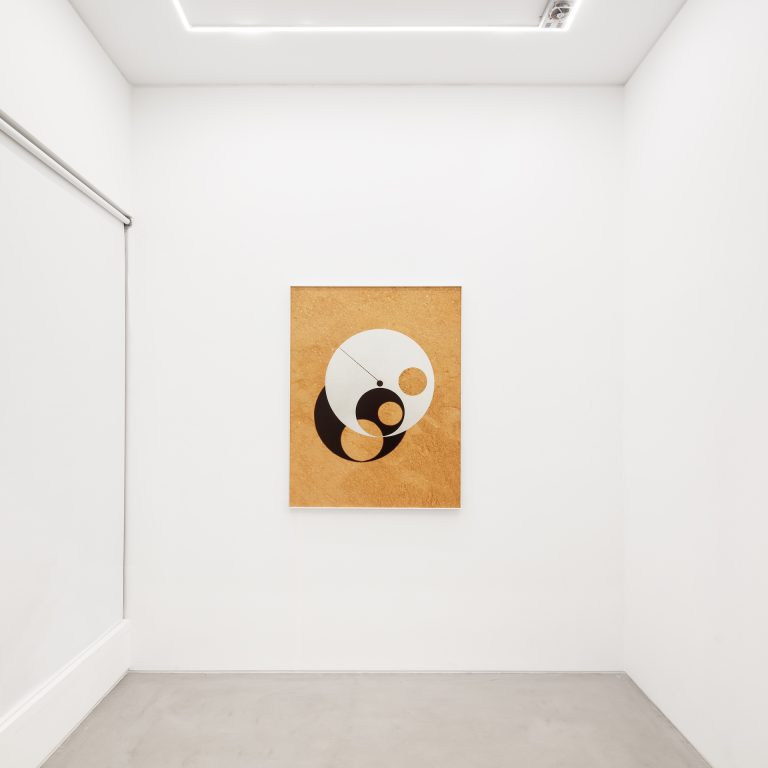
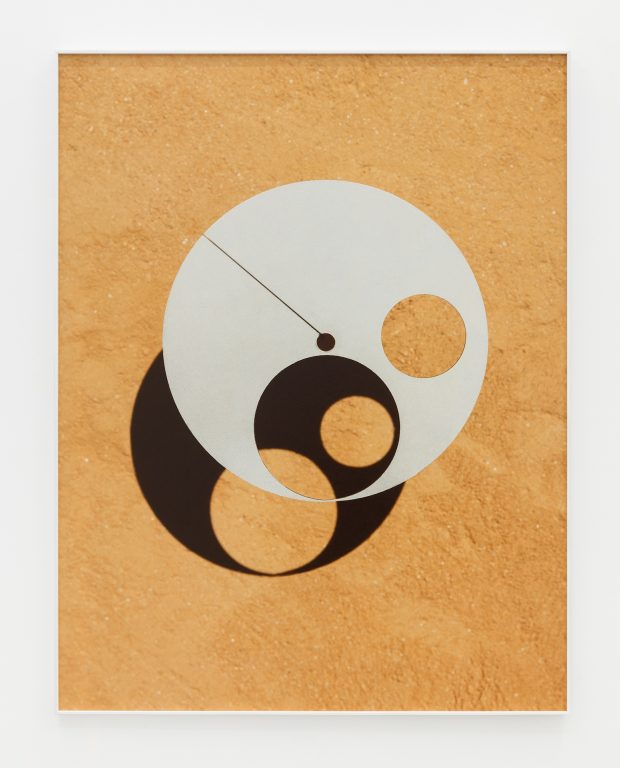
Fine art print on Baryta Hahnemühle paper,
Nielsen Frame, Museum Glass
Unique Edition + 1AP
130×100 cm
VI. Redefining Luxury
In an era dominated by material consumerism, the “Home Philosophy for a New Lifestyle” concept proposes a redefinition of “luxury”: as residing in emotional warmth rather than material coldness. The two artists offer incisive insights on this.
Pauline points out that in a world where everything is obtained with ease, speed, and mechanization, it is increasingly rare for humans to rely solely on their own capacities to create . Therefore, for her, luxury lies in “time, in the attention paid to gesture, and in the human relationships that underpin an object”.
A crafted object that integrates skill with deep emotion is luxurious because it carries “presence, a sensitive density,” and is “born from sharing and exchange between people”. This luxury is emotional, almost silent, residing in the object’s “ability to move us, to endure, and to create an intimate bond”.
Clara’s view aligns closely. She believes true luxury lies in “emotional presence,” the feeling that an object has been made with care, time, and attention. A crafted object carries warmth because it holds “the rhythm of human gestures, something no machine can replicate”.
She concludes that luxury is “not about perfection or excess, but about intimacy: the quiet knowledge that someone devoted part of their life to making this object exist”. Thus, contemporary luxury has shifted completely from external ostentation to an internal, deep experience concerning the quality of time and human connection.
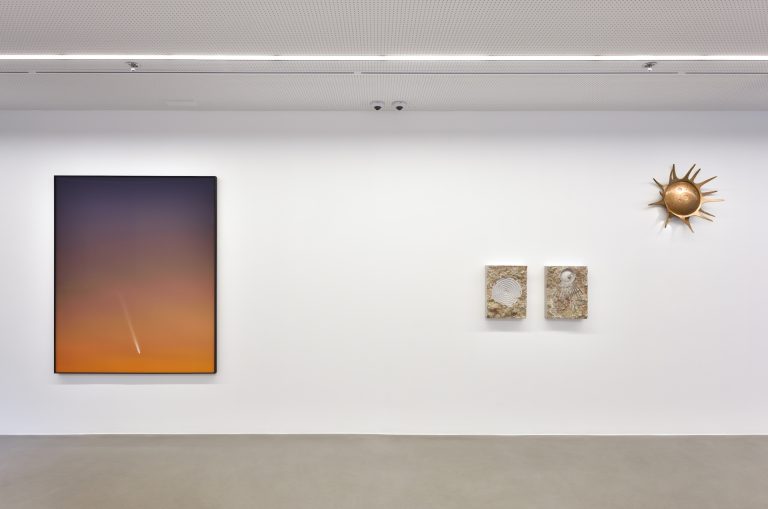
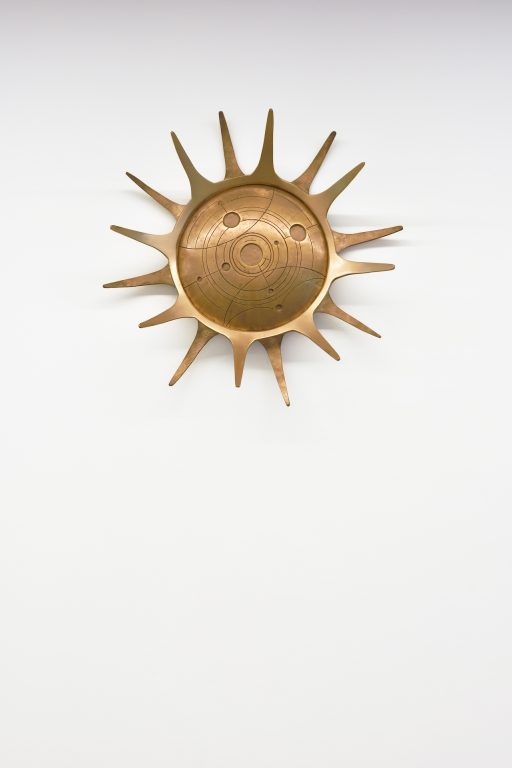
Bronze
54x54x13 cm
Conclusion
Finally, if we expand the boundaries of “home philosophy” from the household to the community, nation, and even the globe, what role can art and craft play? The two artists offer hopeful prospects.
Pauline believes that through this expansion, art and craft become “essential tools of transmission”. They make visible sensitive, often non-verbal forms of knowledge that circulate between territories and “create bridges between cultures”.
They open spaces for dialogue, make perceptible sometimes invisible knowledge, and allow shared values to be transmitted beyond borders. This contributes to building a “collective memory—open, fluid, and capable of linking individuals, communities, and cultures”. In short, through travel, immersion, and collaboration, art and craft become “powerful vectors of cultural understanding”.
Clara also believes art and craft have the power to create “shared languages across borders”. They allow cultures to meet through materials, gestures, and forms rather than just words. When extended beyond the private sphere, they can become “carriers of understanding, respect, and empathy” within and between communities and nations. This reminds us to think as a collective, an inclusive world, and most importantly, constantly evolving.
Through the perspectives of Pauline and Clara, we see that “home” and “heritage” have undergone a profound metamorphosis in contemporary artistic creation. They have evolved from closed, inherent concepts based on blood and geography into open, dynamic processes grounded in shared practice and spiritual resonance.
The core of heritage is that relational model of “thinking through the hands”; the form of home can be a shared studio, an exhibition space that accommodates dialogue, or an inward creative psyche.
Art, as a vessel for emotion, through the manual translation of materials and the collision of different gestures, and within a “new luxury” view that values time and attention, ultimately transcends physical and cultural boundaries to become a bridge of memory connecting the individual to the broader human community.
This, perhaps, is the anchor we need in a fluid era: not a return to a fixed origin point, but the continuous definition and reconstruction of our spiritual “home” through shared creation and understanding.
About “Beyond our Horizons”
From January 29 to April 26, 2026, Paris’s 19M gallery in Aubervilliers will host the “Beyond our Horizons” exhibition. Originating from its successful Tokyo premiere in 2025 at Mori Tower’s 52nd floor which attracted 75,000 visitors, this reimagined showcase now celebrates creative dialogues between French and Japanese artisans.
Initiated by Chanel’s artistic institution 19M, President Bruno Pavlovsky states:
This transcends craftsmanship display to become a laboratory where two cultures’ heritage and innovation collide.
Eleven French ateliers collaborate with 30 Franco-Japanese creators across installations, textiles, and ceramics to explore “how traditional techniques reshape contemporary vision.” Curated by a cross-disciplinary team, the exhibition unfolds as an immersive journey guided by “the poetry of gestures.”
ArtThat is also honored to be invited to engage in this cross-cultural dialogue, hoping to seek new interpretations through 喜可贺©️’s “Chinese Home Philosophy for a New Lifestyle” — as we mentioned in “The Three Pillars of the New Humanistic Paradigm”:
Space as a container of memory, functional flexibility, and a redefinition of “luxury” — which is not about material accumulation, but about emotional warmth and the sedimentation of time.
Please kindly note the coming ArtThat Interview: A New Interpretation of “Home Philosophy” in Cross-Cultural Dialogue — To the Artists of “Beyond our Horizons” II.
Last issue:
“Beyond The Horizon: When Art And Craft Become A Home For Memory I”
“A New Interpretation Of “Home Philosophy” In Cross-Cultural Dialogue”
The article combines AI generation for reference only. All images courtesy of Clara Imbert, shared with permission