
When you stand before the Mona Lisa at the Louvre, have you ever wondered why this small portrait requires the heavy protection of bulletproof glass and sophisticated temperature and humidity control systems?
When you gaze up at the ceiling of the Sistine Chapel in the Vatican, did you know that beneath Michelangelo’s The Creation lie hidden some of the most audacious graffiti from the Renaissance period?
Art possesses the power to shake the human soul, yet artists are not all saints of noble character and artistic excellence. Three extraordinary documentary series—Museum Secrets, Secrets of the Masterpieces, and The Power of Art—take us into the world’s greatest artistic temples, from the British Museum in London and the Louvre in Paris to the Vatican Museums and the Metropolitan Museum in New York, uncovering truths that are mysterious, shocking, or deeply moving.
I. The Mystique of Museums: When Rare Treasures Meet Historical Fog
The Vatican Museums: The Biggest Secret of the Smallest Country
This museum belongs to the world’s smallest country, yet its collection rivals that of the Louvre and the British Museum. With 12 exhibition halls and 5 art galleries, it houses ancient Greek and Roman artifacts and Renaissance masterpieces, including Michelangelo’s The Creation and The Last Judgment.
But few know that beneath those sacred frescoes once lay “graffiti” left by Renaissance artists themselves—not acts of vandalism, but another form of artistic dialogue.
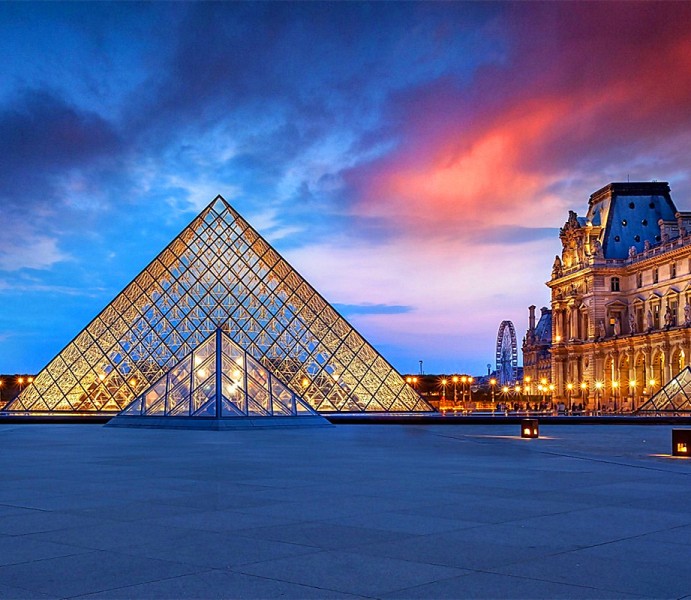
The Louvre: The Security War Behind 400,000 Collections
As the guardian of the world’s three greatest treasures—the Venus de Milo, the Mona Lisa, and the Winged Victory of Samothrace—the Louvre faces challenges beyond imagination. After the theft of the Mona Lisa in 1911, this ancient palace established the world’s most rigorous art protection system. Today, that seemingly simple sheet of bulletproof glass is actually a technological fortress integrating temperature control, humidity regulation, UV protection, and shock absorption.
Founded in 1204 on the Right Bank of the Seine in central Paris, the Louvre houses over 400,000 works spanning six categories: sculpture, painting, decorative arts, ancient Near East, ancient Egypt, and Greco-Roman antiquities.
Royal Ontario Museum: A Home for Chinese Artifacts Overseas
Located in Toronto, the Royal Ontario Museum (ROM) is the fifth largest museum in North America, yet it holds the richest collection of Chinese art outside China itself.
From imperial costumes to complete Ming Dynasty tombs—including stone archways, guardian figures, sacrificial altars, and burial chambers—these displaced national treasures each tell a complex historical tale.
Additionally, the museum houses masterpieces from Egypt, Rome, and Greece, as well as ancient European arms and musical instrument collections. Particularly popular with children are the exhibitions on evolution and dinosaurs.
II. Secrets of the Masterpieces: Soul Revolutions of Seven Art Movements
Renaissance: Seeking Balance Between Divinity and Humanity
When Botticelli painted Primavera and Da Vinci created The Last Supper, they were not trying to overthrow religion but attempting to restore balance between faith and history. It was a “rebirth of freedom and humanism,” a young, vibrant generation rediscovering the value of “man.”
During the Renaissance, by seeking out ancient Greek and Roman culture, artists gradually moved beyond mere veneration of classical glory to forge a new and different culture.
Baroque: The Irregular Pearl, Emotional Eruption in Turbulent Times
“Baroque” originally referred to irregularly shaped pearls. In 17th-century Europe, the dramatic chiaroscuro of Rembrandt’s The Night Watch and the flowing dynamism of Velázquez’s Rokeby Venus reflected the anxiety and passion of turbulent times. This was not classical restraint but naked emotional release.
Baroque style inherited Mannerism from the late Renaissance, emphasizing fluidity, theatricality, and exaggeration, often employing dynamic compositional elements like curves and diagonal lines.
Romanticism and Expressionism: From Return to Nature to Cries of the Soul
The tragic grandeur of Goya’s The Third of May and the fervent passion of Delacroix’s Liberty Leading the People initiated a trend yearning for nature and fascinated by the medieval period. By the early 20th century, Munch’s The Scream tore open the pressures and fears of modern life, allowing art to become an unrestrained expression of inner states.
Romanticism advocated creative freedom, emphasizing the artist’s individuality, imagination, and emotion. Expressionist works, shocking for their time, provoked strong emotional responses in viewers through their uninhibited expression, whether one agreed with them or not.
From Impressionism to Surrealism: The Interplay of Light, Color, and the Subconscious
From the play of light in Renoir’s Dance at Le Moulin de la Galette to the fiery emotion of Van Gogh’s Sunflowers, and finally to the dreamlike collages of Dalí’s Christ of St. John of the Cross, art was no longer merely “depicting reality” but creating “super-reality”—another dimension beyond everyday life.
Impressionism treated light as the only real object, breaking down form to reveal the painter’s subjective vision. Neo-Impressionism attempted scientific color analysis using small, methodical brushstrokes. Later influenced by Chinese landscape painting, Post-Impressionism simplified complex forms to create more suggestive, vivid, and resonant images.
Surrealism, originating in France against the backdrop of Freudian psychoanalysis, emphasized intuition and the subconscious. It approached the reconstruction of perspectives with greater criticality, presenting realities beyond ordinary daily life.

III. The Power of Art: Eight Masters and Their Turbulent Lives
Caravaggio: Saints from the Taverns
In Rome in 1603, while other painters depicted Christ with idealized beauty, Caravaggio sought his models in the streets and taverns. He painted “a Savior of flesh and blood,”朴实而真实 (simple and real), generating controversy that persists today. The glory of truth does not necessarily require beautiful garments.
Rembrandt: From the Glory of The Night Watch to Bankrupt Stubbornness
The Night Watch made Rembrandt the most sought-after painter in Amsterdam; his heroic, seemingly impossible creation stunned the world. Yet ten years later, this stubborn painter declared bankruptcy.
When the city hall offered him a chance at redemption, rather than choosing classical restraint, he created “the roughest and most powerful work in history”—and one of the greatest works of his age.
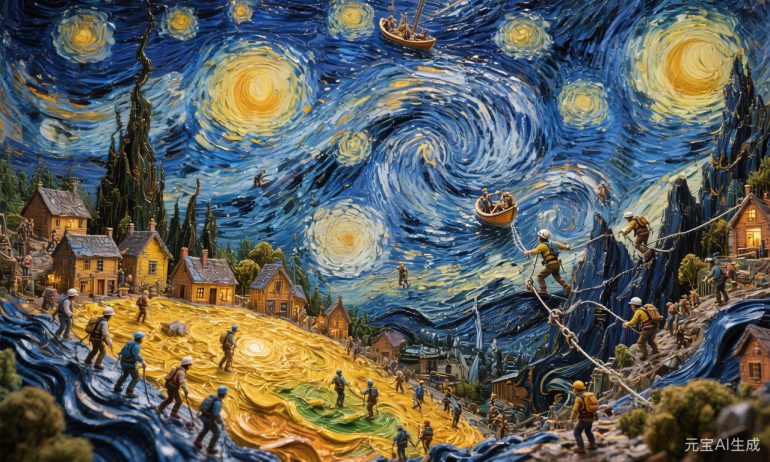
Van Gogh: Fury Transformed into Starry Nights
“Cruel insecurity and pain” remained vividly rooted in Van Gogh’s heart. He painted himself in the mirror, yet never truly saw himself.
Until that summer of 1890, when instead of raising his brush, he raised a gun. Those mad colors and swirling brushstrokes were a soul burning itself to illuminate art.
Picasso and Rothko: When Art Confronts War and Capital
When Nazi Germany bombed Guernica, Picasso recorded the brutality of war in Cubist language. In 1958 New York, when commissioned to paint for the Four Seasons restaurant in the Seagram Building, Rothko declared:
“This is where the richest bastards in New York come to eat and show off. I want to ruin their appetites.”
What is art, after all? A consumer durable, or a force capable of saving the human soul?
Conclusion: Obsessive Pursuit, Total Surrender to the Inner Voice
From the Vatican’s hidden graffiti to the Louvre’s security systems, from Napoleon’s “portrait of lies” to Dalí’s surrealist dreams, these stories—whether familiar or shrouded in mystery—are all tinged with secrecy and fascination.
These artists may have been mad, destitute, or decadent, but they shared one trait: obsessive pursuit and total surrender to the inner voice.
The next time you enter a museum, don’t just rush through for photos. Behind those silent exhibits lie the brilliance and darkness of human nature, the truths and lies of history, and the most primal, soul-shaking power of art.
Recommended Viewing:
- Canada History Channel Documentary series Museum Secrets (three seasons)
- BBC Documentary series Secrets of the Masterpieces (seven episodes)
- BBC Documentary The Power of Art (biographies of eight masters)